
The applicant was a Russian national who had completed a master’s programme in International Marketing in Moscow. She later needed to submit the qualification in China.
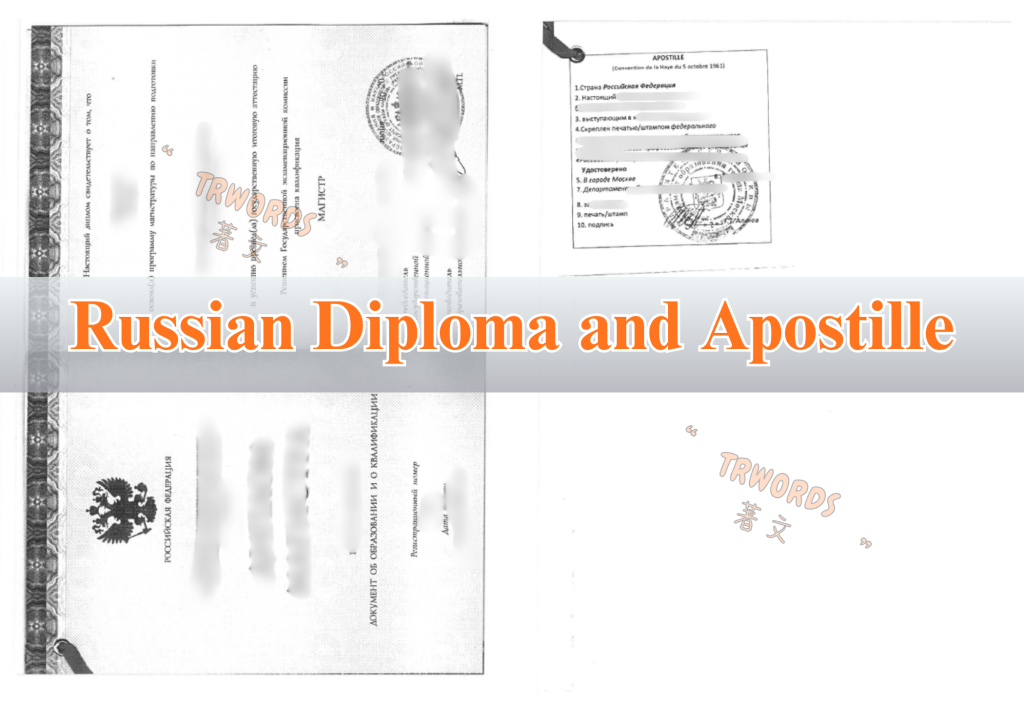
Before the document was brought to China, the master’s degree certificate had already received a Russian Apostille. This provided the authentication required for the Russian document to circulate internationally.
Using a Russian Apostille in China
The Apostille Convention has applied between China and Russia since November 7, 2023. A Russian public document covered by the Convention can generally be used in the Chinese mainland after receiving a Russian Apostille, without further legalization by the Chinese Embassy or Consulate in Russia.
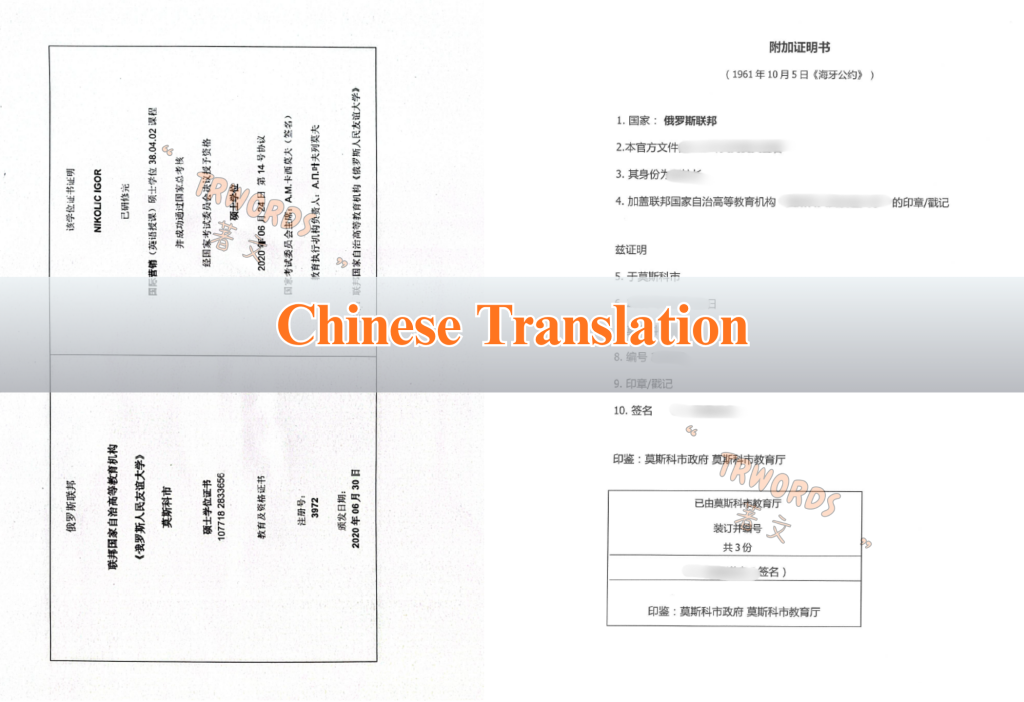
The Apostille and the degree certificate should be treated as one complete document set. Both parts must be provided for review, and any foreign-language content intended for submission should be included in the Chinese translation.
Can a Foreign Document Be Notarized in China?
Documents are generally authenticated in the country where they were issued. A Chinese notary office may have no direct way to verify the issuing university, foreign signature, official seal or registration record.
When a foreign document is submitted as the basis for notarization in China, the notary office will generally expect it to have completed the applicable Apostille or consular legalization procedure in its country of origin. The authentication gives the Chinese notary office a basis for accepting the foreign document as part of the application.
Foreign passports are a common exception and can generally be handled without an Apostille. Except for foreign passports and other limited exceptions accepted by the notary office, an unauthenticated foreign document will generally not be accepted by a notary office in China.
What Is Photocopy-to-Original Conformity Notarization?
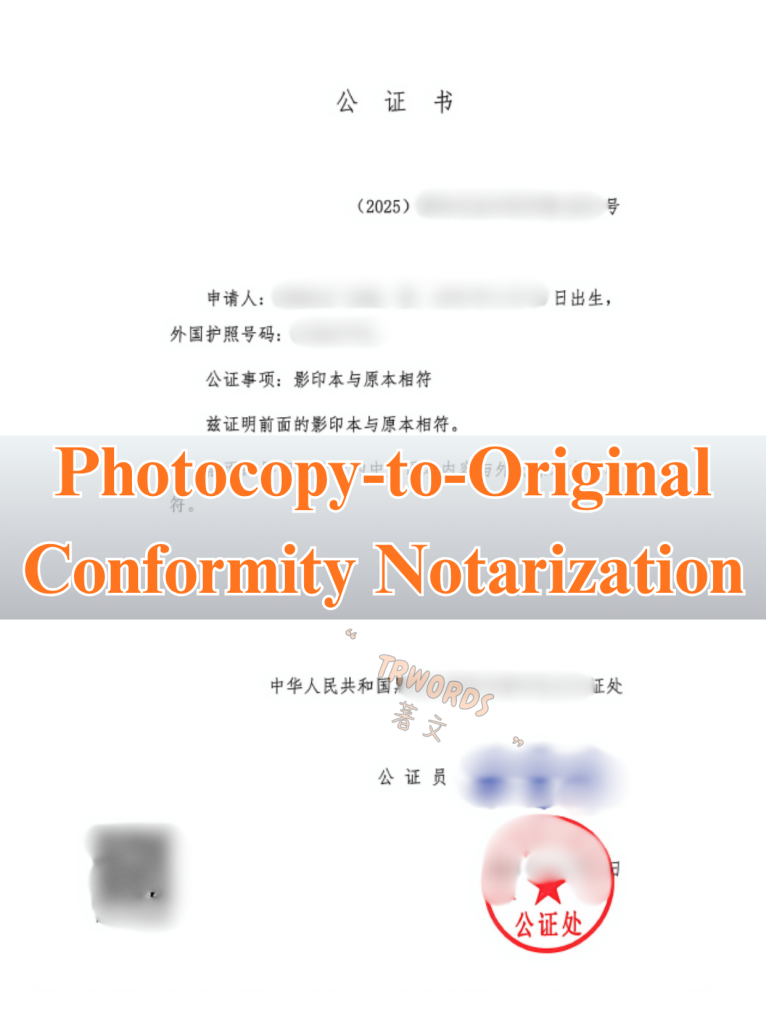
Chinese law allows notary offices to certify that a copy or photocopy of a document is consistent with the original. The resulting notarial certificate contains the copied document and formal notarial wording confirming the conformity.
This type of notarization does not evaluate the academic level of the qualification or provide a Chinese degree-equivalency assessment. Its purpose is to certify the relationship between the reproduced document and the original document on which the application is based.
For this case, clear scans of the degree certificate and Russian Apostille were sufficient for processing. The applicant did not need to mail the original documents to us.
What Did the Chinese Notarial Certificate Include?
The completed notarial certificate included a copy of the Russian master’s degree certificate and a copy of its Apostille. Corresponding Chinese translations of both the degree certificate and the Apostille were also included as attachments.
The certificate focused on confirming that the attached reproductions were consistent with the original documents.
The Completed Document Route
The document passed through the following stages:
Russian master’s degree certificate → Russian Apostille → Chinese translation → photocopy-to-original conformity notarization in China
This route can be suitable when an apostilled foreign diploma needs to be submitted to a Chinese authority together with a Chinese translation and a formal Chinese notarial certificate. The precise document format should still be confirmed with the receiving organization before the application begins.
Preparing a Foreign Diploma for Use in China
Applicants should provide the complete diploma and Apostille, including all pages, seals, signatures and notes. Omitting the Apostille page or translating only the main degree certificate may leave the receiving authority without a complete document chain.
For this Russian applicant, the final notarial certificate brought the degree, Apostille and Chinese translations together in a form that could be submitted in China. Clear scans were sufficient to begin the process, while the Russian Apostille established the document’s cross-border authentication.