
Emma, a British national, lived in China for four years. After leaving China, she was asked to provide a Chinese police clearance certificate for an official procedure in Poland.
The document is also commonly described as a Certificate of No Criminal Record. It is used to confirm whether a foreign national had a criminal record during a specified period of residence in China.
Obtaining the Chinese Police Certificate
The first step was to apply for a certificate of no criminal record from the relevant Chinese public security authority. The application needed to cover her documented period of residence in China.
Requirements can vary between cities and police authorities. The available records and the period covered by the certificate should therefore be checked before the overseas notarization process begins.
From a Police Certificate to a Notarial Certificate
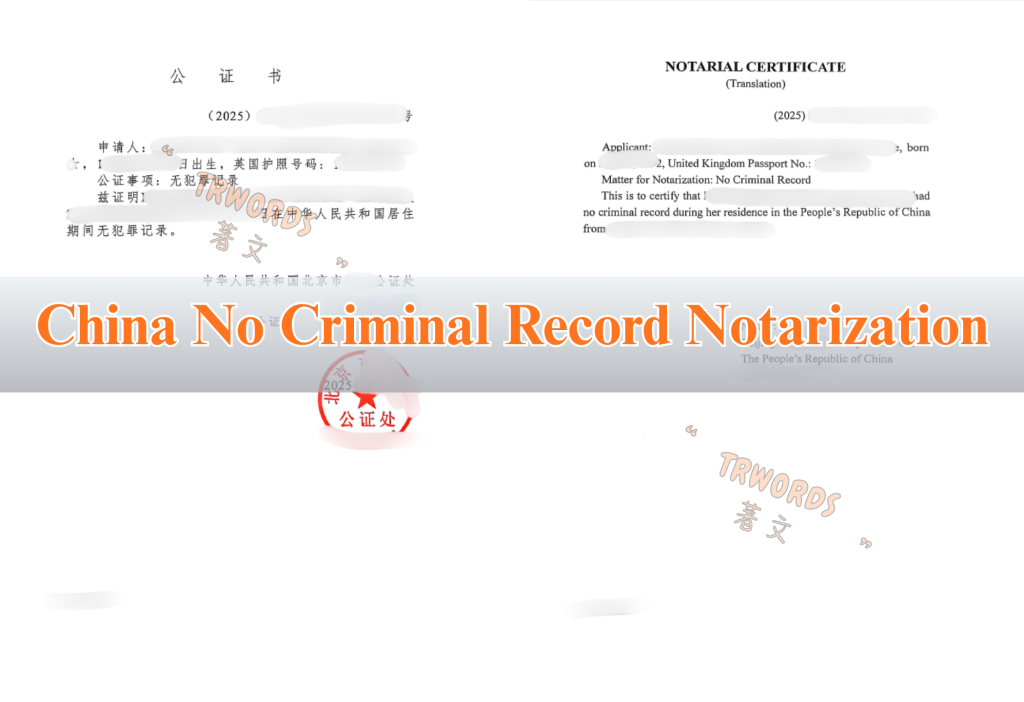
After Emma obtained the police-issued certificate, we submitted it to a Chinese notary office. The notary office reviewed the certificate and prepared a formal Notarial Certificate of No Criminal Record for overseas use.
These two documents serve different purposes. The police authority issues the original record certificate, while the notary office prepares the notarial certificate that can proceed to international authentication.
The notarial certificate included the relevant Chinese document and translation. The required translation language should always be confirmed with the authority receiving the document in Poland before the notarization application is submitted.
China Apostille for Use in Poland
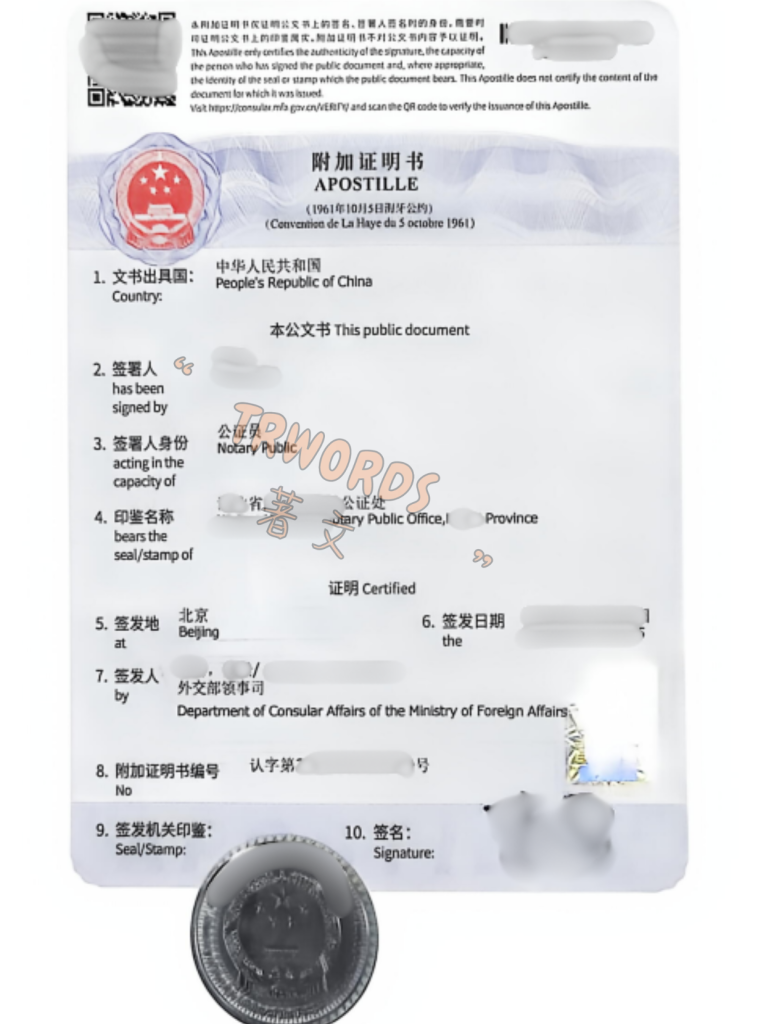
The notarized document then needed a China Apostille before it could be submitted in Poland. The document route for Emma’s case was:
Chinese police certificate → Chinese notarization → China Apostille → Use in Poland
The Apostille Convention has applied between China and Poland since November 7, 2023. Chinese public documents within the scope of the Convention can therefore be apostilled for use in Poland without further legalization by the Polish Embassy or Consulate in China.
The Apostille confirms the authenticity of the signature, official capacity and seal shown on the Chinese notarial certificate. It does not confirm the contents of the police record or guarantee that the receiving authority will accept the document for every procedure.
Why the Full Process Was Necessary
Obtaining the police certificate completed only the first stage. Since Emma needed to use the document outside China, the certificate also had to be converted into an appropriate notarial document and authenticated for Poland.
The Completed Document Package
We assisted Lily with obtaining the Chinese certificate of no criminal record, submitting it to the notary office and arranging the China Apostille. The completed document package was then ready for her procedure in Poland.
Foreign nationals who previously lived in China can often begin by providing clear scans of their current and former passports and Chinese visas. The exact application route depends on where they lived, how long they stayed and what the receiving authority requires.