
After working in China for a period of time, a U.S. client later needed to prepare a China police clearance document for overseas use. He was outside China when the requirement came up, and the document was intended for employment or residence-related procedures in Kazakhstan.
Like many foreign professionals who have lived and worked in China, he needed a document showing his criminal record status during his stay in China. Since his work and residence records were based in Beijing, the police clearance process was arranged through the relevant Beijing records.
The client did not need to return to China. In this case, the application was handled remotely using clear scanned copies of the required documents. No original passport, visa, or residence permit documents had to be mailed to China.
Why a China Police Clearance Certificate Was Needed
Foreign nationals who previously worked, studied, or lived in China may later be asked to provide a China police clearance certificate when applying for a new job, residence document, work permit, immigration procedure, or other official matter in another country.
This document may also be called a China no criminal record certificate, Chinese police certificate, police clearance certificate, or certificate of no criminal record. The wording may vary, but the purpose is usually similar: to show whether the applicant has a criminal record during a certain period of stay in China.
For this U.S. client, the document needed to cover his time in China and then be prepared in a format suitable for overseas submission. Because the document was to be used in Kazakhstan, the process involved three main steps: obtaining the Beijing no criminal record certificate, arranging notarization with Russian translation, and completing China Apostille.
The Main Challenge: Handling the Process from Outside China
The client was no longer in China, so the biggest question was whether the process could be completed remotely. This is a common concern for former expats, especially when they left China years ago or no longer have easy access to local offices.
For police clearance matters, the key issue is usually whether the applicant can provide enough records to support the application. These records may include the passport used during the stay in China, Chinese visas or residence permits, temporary residence registration records, and sometimes entry and exit records.
In this case, the client had sufficient scanned documents for the process to move forward. Since the documents could be reviewed and submitted based on scanned copies, he did not need to travel back to Beijing or mail his original passport internationally.
Documents Used for the Application
For a China police clearance certificate, the required documents can vary by city and by the applicant’s stay history. In practice, the following documents are often important for foreign applicants:
- passport information page,
- Chinese visas or residence permits,
- temporary residence registration records,
- work or stay-related records,
- and entry and exit records if requested.
For notarization, the passport and Chinese visa or residence permit records are usually important because they help connect the applicant’s identity with the period of stay in China.
Temporary residence registration is also a key document in many cases. It helps show where the applicant was registered while living in China. If the stay record is incomplete or spread across different cities, the case may require closer review.
For this client, the police clearance was based on his Beijing records, so the document route was arranged accordingly.
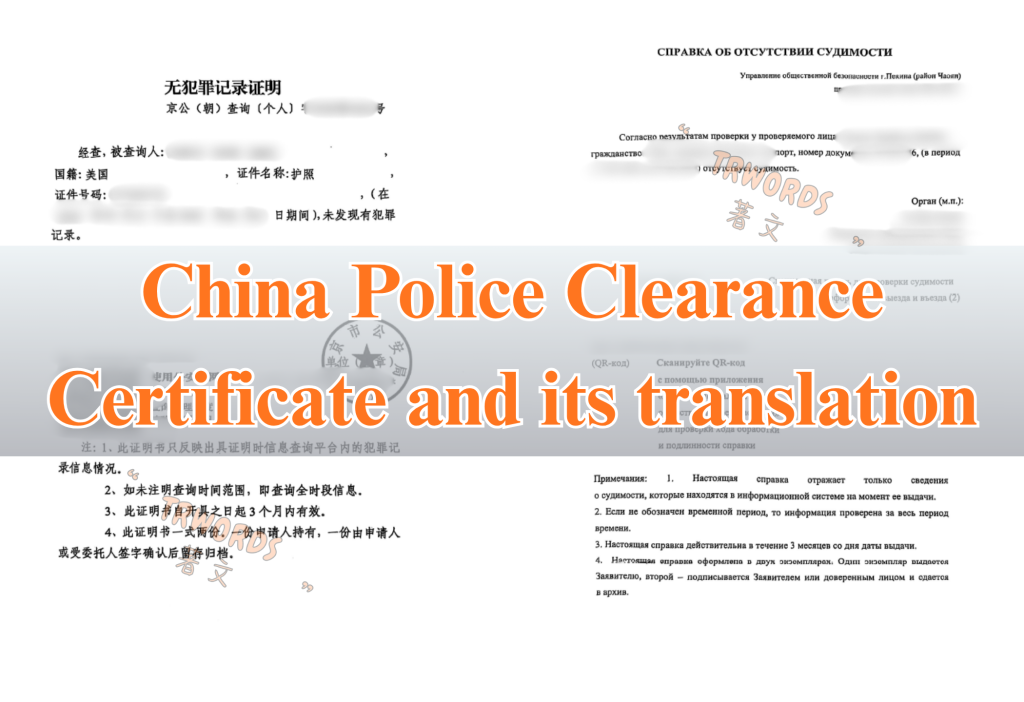
Step 1: Beijing No Criminal Record Certificate
The first step was to obtain the no criminal record certificate based on the client’s Beijing stay records. This document was the foundation of the later notarization and Apostille process.
For foreign applicants, the certificate usually needs to match the person’s identity and stay history. The passport details, visa or residence permit records, and residence registration records should be reviewed carefully before submission.
Once the police clearance certificate was issued, it could be used for the next step: notarization by a Chinese notary office.
Step 2: Notarization with Russian Translation
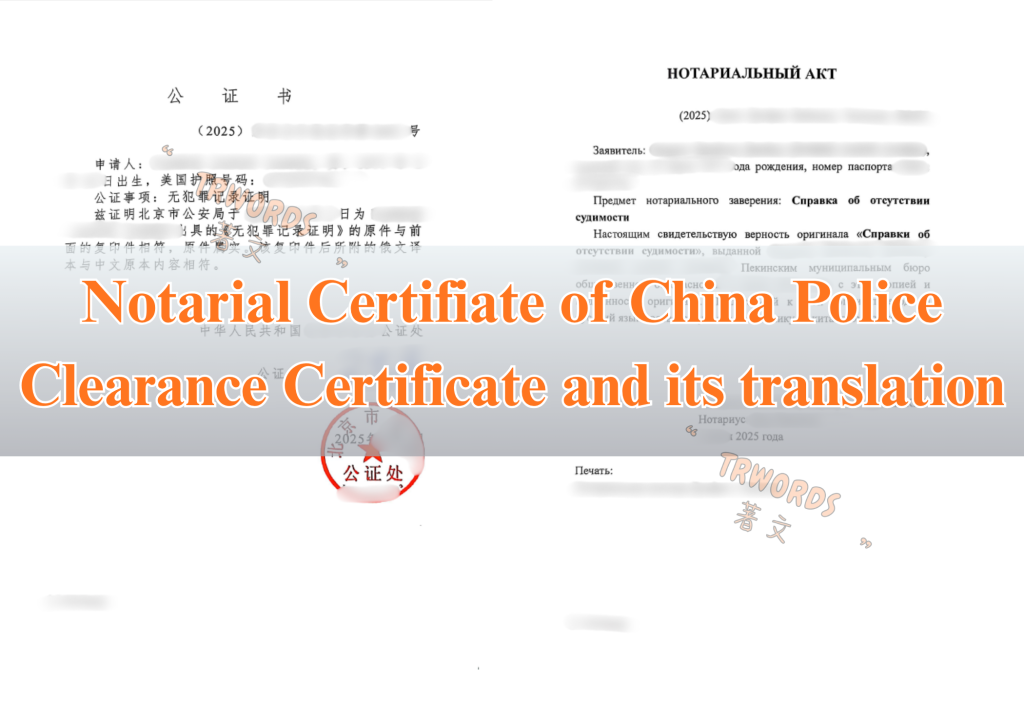
After the no criminal record certificate was prepared, the next step was notarization in China.
The notarial certificate confirmed the relevant no criminal record document and was prepared with a Russian translation. This was important because the document was intended for use in Kazakhstan, where Russian is commonly used in official and business contexts.
A notarized China police clearance document is often easier for overseas authorities to review because it includes formal notarial wording, the applicant’s identity details, and the translated content in a structured format.
In this case, the notarization process took about five working days. Timing can vary depending on the notary office, document workload, and whether any additional review is needed.
Step 3: China Apostille for Overseas Use
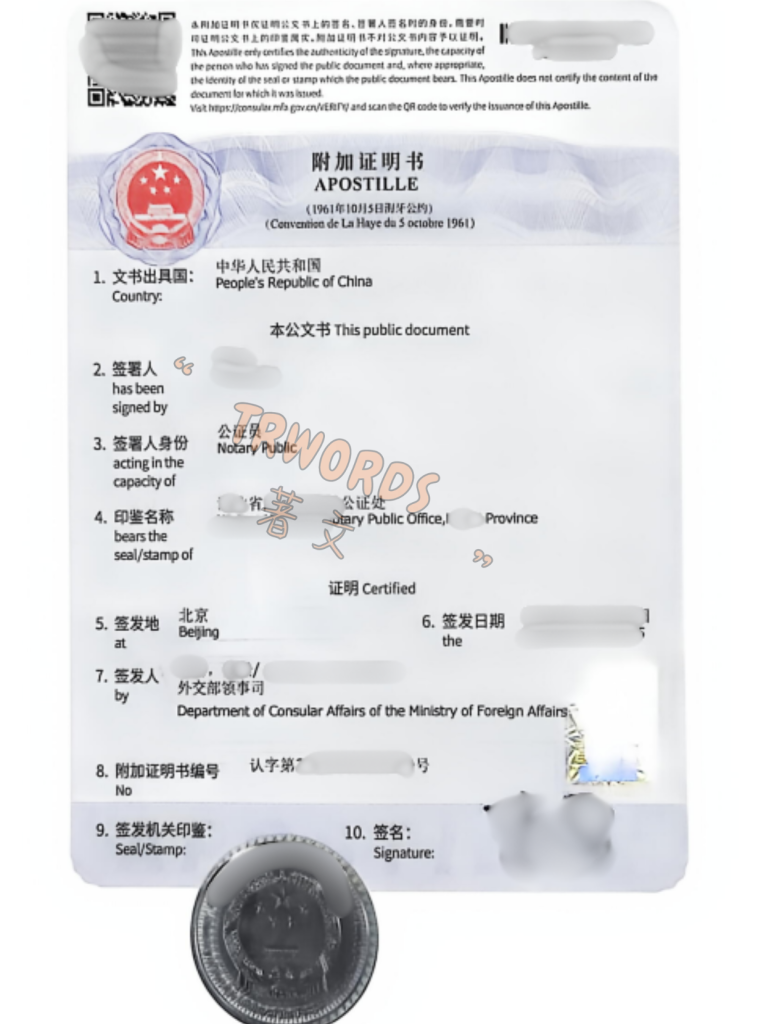
After notarization, the document was submitted for China Apostille.
Since China’s Apostille system is now in effect and Kazakhstan accepts Apostille documents, the notarized police clearance document could go through the Apostille route for use in Kazakhstan.
The Apostille confirms the official signature, seal, or capacity on the Chinese public document. For applicants, this step is important because a notarized document alone may not be enough for overseas use if the receiving authority requires Apostille.
In this case, the Apostille process took about five working days. The final timing may vary depending on the issuing authority, public holidays, and application volume.
Delivery Abroad by DHL
Once the notarization and Apostille were completed, the final document was ready for international delivery.
The completed China police clearance notarization and Apostille document could be shipped abroad by DHL. This allowed the client to receive the physical document without returning to China.
For overseas applicants, this last step is often just as important as the application itself. A completed police clearance document usually needs to be submitted in physical form, so reliable international delivery helps complete the process smoothly.
What This Case Shows
This case shows that former foreign workers in China may still be able to obtain a China police clearance certificate after leaving the country.
For this U.S. client, the process was completed remotely. He did not need to return to China, and he did not need to mail original identity documents. Clear scanned copies were sufficient for the application and document preparation in this case.
The key was having the right records: passport details, Chinese visa or residence permit documents, temporary residence registration records, and other supporting materials related to the stay in China.
The final document route was also important. Because the document was intended for overseas use, the process did not stop at obtaining the no criminal record certificate. It continued through notarization, Russian translation, and Apostille.
Need a China Police Clearance Certificate for Overseas Use?
If you previously worked, studied, or lived in China and now need a police clearance certificate for use abroad, we can assist with the document process remotely.
Our service can include China no criminal record certificate application support, notarization, translation, China Apostille, and international delivery by DHL.
You can send scanned copies and any written requirements from the receiving authority. We will prepare the requested document service based on the materials and process you confirm.