
Applying for China permanent residence can feel overwhelming, especially when your document list includes papers issued in different countries, old passports, police clearance certificates, marriage certificates, birth certificates, or family relationship documents. Many applicants first hear about the “Five-Star Card” from friends, employers, relocation consultants, or online discussions, then realize that preparing the supporting documents can take much longer than expected.
This article is a practical reference for foreigners preparing documents for a China permanent residence application. The exact list of documents depends on your application category, personal situation, and the local exit-entry authority handling your case, so it should be used as a preparation guide rather than a final official checklist.
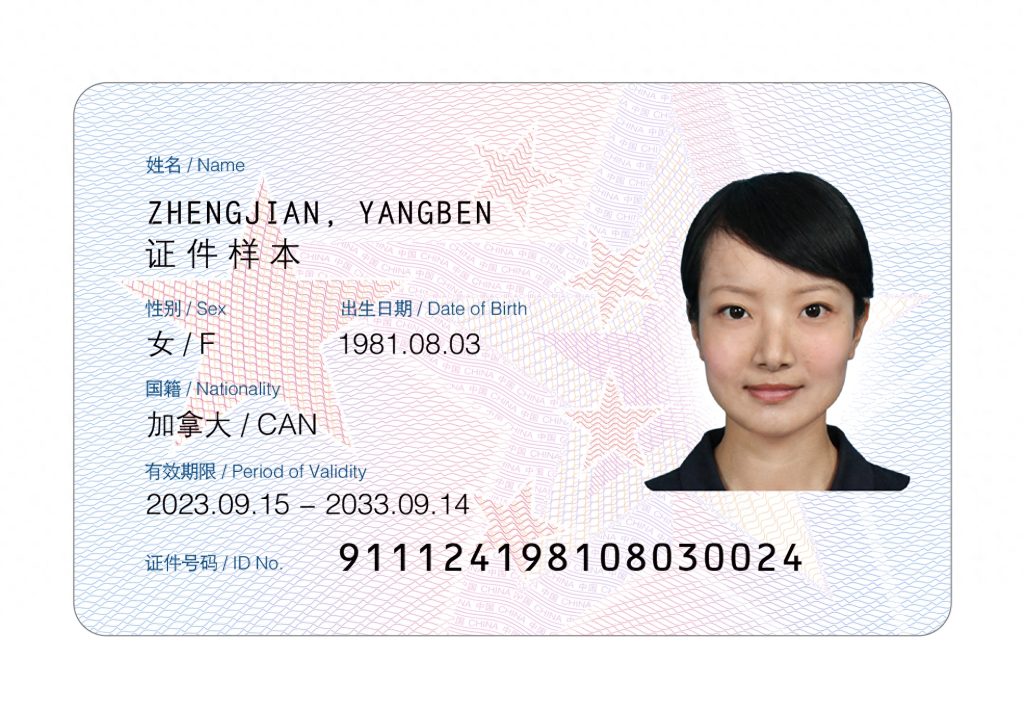
What Is the China Five-Star Card?
The China “Five-Star Card” is a commonly used nickname for the new version of the Foreign Permanent Resident ID Card of the People’s Republic of China. The new card design includes five-star elements, which is why many foreign residents and service providers now refer to it as the Five-Star Card.
The official document is still the Foreign Permanent Resident ID Card. It is issued to foreigners who have been approved for permanent residence in China, and it can be used as a legal identity document in many situations in China.
For applicants, the most important point is that the card itself comes after approval. Before that, the real work is preparing the application materials, especially documents issued outside China that may need translation, notarization, Apostille, or consular legalization.
Basic Documents Commonly Requested
Although requirements may vary, many China permanent residence applications start with several basic documents. These may include a valid foreign passport, current or previous Chinese visas and residence permits, recent photos, an application form, a health certificate, and an overseas police clearance certificate.
Applicants may also be asked to provide a personal resume, proof of residence in China, tax records, employment documents, or other supporting materials. The local exit-entry authority may request additional documents depending on the application type and the applicant’s background.
It is also common for applicants to prepare copies of old passports if they changed passports during their stay in China. This helps connect their China visa, residence permit, entry-exit, work, study, or family records across different periods.
Documents by Application Category
China permanent residence applications can be based on different categories, such as employment, investment, family reunion, parent-child relationship, dependent relatives, special contribution, or high-level talent status. Each category may require a different set of supporting documents.
For employment-based applications, applicants may need documents related to their position, employer, salary, tax payment, work experience, or professional qualification. For investment-based applications, company registration documents, capital contribution records, tax documents, and business operation materials may be relevant.
For family reunion cases, documents such as marriage certificates, birth certificates, family relationship certificates, identity documents of the Chinese spouse or family member, proof of residence, and financial support documents may be requested. For child-related or dependent-relative applications, the authorities may pay close attention to parent-child relationship proof, custody documents, and evidence of dependency.
Overseas Police Clearance Certificate
An overseas police clearance certificate is one of the documents that many applicants pay special attention to. It is usually used to show whether the applicant has a criminal record outside China during a relevant period.
If the police clearance certificate is issued outside China, it may need to be translated into Chinese. Depending on the issuing country and the local authority’s requirement, it may also need notarization, Apostille, or consular legalization before it can be submitted in China.
Timing matters. Some authorities may only accept a police clearance certificate issued within a recent period, so applicants should confirm the validity requirement before ordering the document, translation, or authentication.
Marriage Certificate, Birth Certificate and Family Documents
Foreign-issued marriage certificates, birth certificates, adoption documents, name change certificates, divorce documents, and family relationship certificates may be important in family-based permanent residence applications. These documents are often used to prove the relationship between the applicant and a Chinese spouse, child, parent, or other family member.
If the document is not in Chinese, a Chinese translation may be required. In some cases, the receiving authority may ask for a stamped translation, a notarized translation, or a document that has been notarized and authenticated in the country of issue.
Applicants should also check whether names, dates, places of birth, and passport numbers are consistent across documents. If a spouse or child has changed names, changed nationality, or used different passports, additional supporting documents may be needed to explain the connection.
Documents Issued in China
Some applicants also need to prepare documents issued in China. These may include work permits, employment certificates, tax payment records, residence registration records, Chinese marriage registration documents, Chinese birth documents, school records, company documents, or certificates issued by local authorities.
Documents issued in China may need to be notarized if they are used as formal supporting evidence. If they are later used outside China, they may also need Apostille or consular legalization depending on the destination country.
For China permanent residence applications submitted inside China, the local authority will decide whether a copy, original, translation, notarized document, or additional verification is required. It is better to confirm the format before preparing multiple versions of the same document.
Translation, Notarization, Apostille or Legalization
One of the most confusing parts of document preparation is understanding the difference between translation, notarization, Apostille, and consular legalization. These are different steps, and the required route depends on the document type, issuing country, and receiving authority.
A translation makes the document readable in Chinese. A notarized translation or translation accuracy notarization may confirm that the Chinese translation is consistent with the original document. Apostille is used between countries that accept Apostille documents, while consular legalization may still be required for documents issued in or used in countries outside the Apostille system.
Applicants should not assume that one format works for every document. A foreign police clearance certificate, a marriage certificate, and a birth certificate may each have different requirements, even within the same permanent residence application.
Common Problems Applicants Should Check Early
Many document delays happen because of small details. A name may be spelled differently on a passport and a marriage certificate, or a birth certificate may not show both parents’ full names. A police clearance certificate may be issued too early, or a document may be translated without including stamps, handwritten notes, or official remarks.
Another common issue is missing authentication. Some applicants prepare a translation first, then later discover that the original foreign document should have been notarized, apostilled, or legalized before submission.
Old passports can also create problems. If your Chinese residence records, work records, or entry-exit records are linked to an old passport, keep copies of that passport and related visas whenever possible.
How We Can Help with Document Preparation
We assist foreigners with document translation, notarization, Apostille, and consular legalization for China-related applications. For China permanent residence preparation, common documents may include overseas police clearance certificates, marriage certificates, birth certificates, name change documents, academic documents, company records, and Chinese-issued supporting documents.
Our service can include Chinese translation, stamped translation with a business license copy, notarized translation, China notarization, Apostille, consular legalization, and international document shipping when needed. If you already know the document format required by the local exit-entry authority, we can help prepare the document according to that requirement.
We do not determine whether an applicant qualifies for China permanent residence. Applicants should confirm eligibility, application category, and final document requirements with the relevant exit-entry authority. Our role is to help prepare the translation, notarization, authentication, or legalization documents according to the instructions you provide.
Final Reminder
The China Permanent Residence Five-Star Card can be a valuable identity document for foreigners who plan to live, work, invest, or reunite with family in China long term. However, the application process usually requires careful document preparation, especially when foreign-issued certificates are involved.
If you are preparing for a China permanent residence application, start early and confirm the document requirements with the local authority before arranging translation, notarization, Apostille, or legalization. Careful preparation can save time and reduce the chance of being asked to resubmit documents later.