
As international mobility continues to increase, academic credentials frequently need to cross borders. Whether for further study, professional licensing, immigration, or employment, universities and institutions abroad often require official verification of Chinese academic documents.
In such cases, degree certificate notarization and Apostille in China become essential steps.
This article provides a comprehensive overview of:
- What degree certificate notarization is
- How Apostille works in China
- The procedural steps involved
- Translation requirements
- Processing timelines
- Common concerns for international graduates
It is particularly relevant for international students who obtained a Bachelor’s degree in China and intend to use their academic credentials abroad.
Why Is Notarization and Apostille Required for Academic Documents?
A university-issued degree certificate is valid within China as proof of academic achievement. However, foreign institutions typically require additional verification to ensure:
- The document is authentic
- The issuing institution is legitimate
- The certificate has not been altered
- The signatures and seals are genuine
Notarization and Apostille serve this purpose.
These procedures do not reassess academic merit. Instead, they confirm the authenticity and formal validity of the document for international use.
What Is Degree Certificate Notarization in China?
Degree certificate notarization is a formal process conducted by a Chinese notary office with foreign-related qualifications.
During this process, the notary:
- Verifies the authenticity of the original degree certificate
- Confirms the identity of the applicant
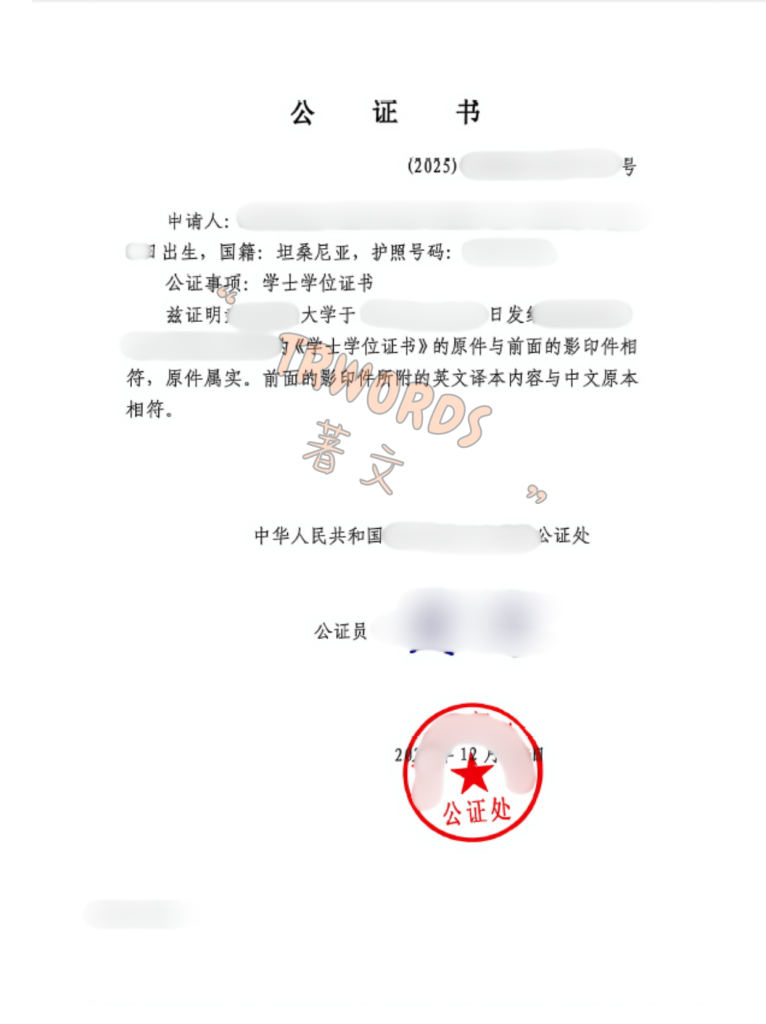
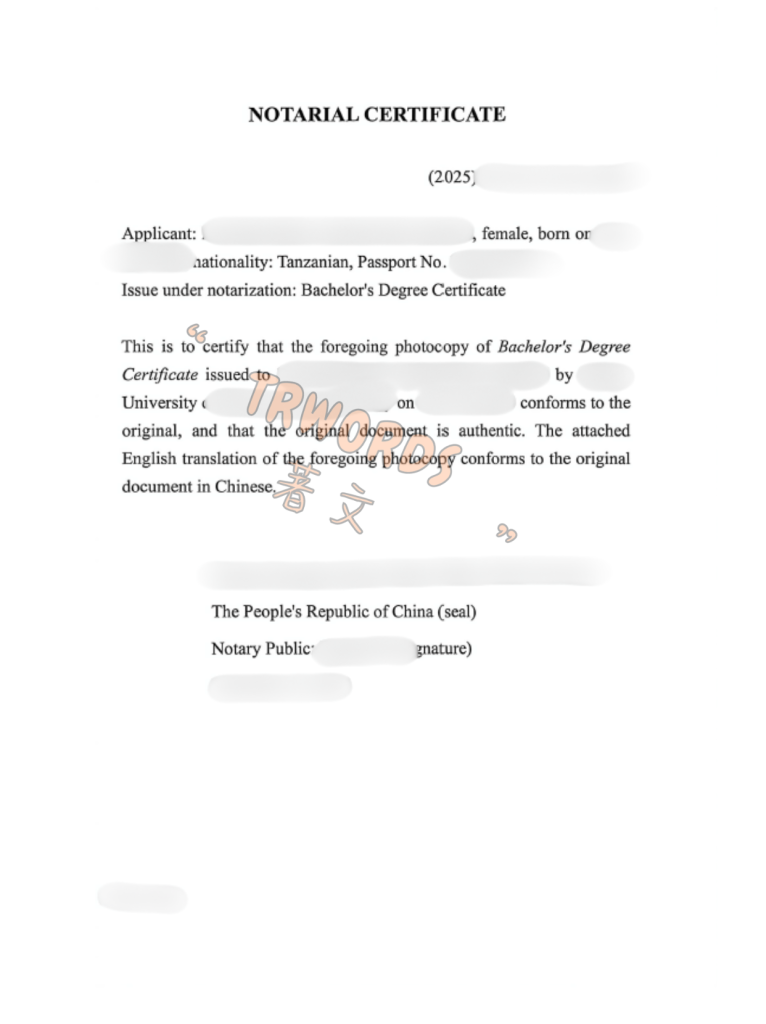
- Issues an official notarial certificate
The notarial certificate usually includes:
- A copy of the degree certificate
- A bilingual notarial statement
- The notary’s signature and official seal
It is important to clarify:
Notarization does not reissue the degree certificate.
It certifies that the presented document is genuine.
For international students holding a Bachelor’s degree awarded by a Chinese university, notarization is typically the first step before international legalization.
What Is an Apostille?
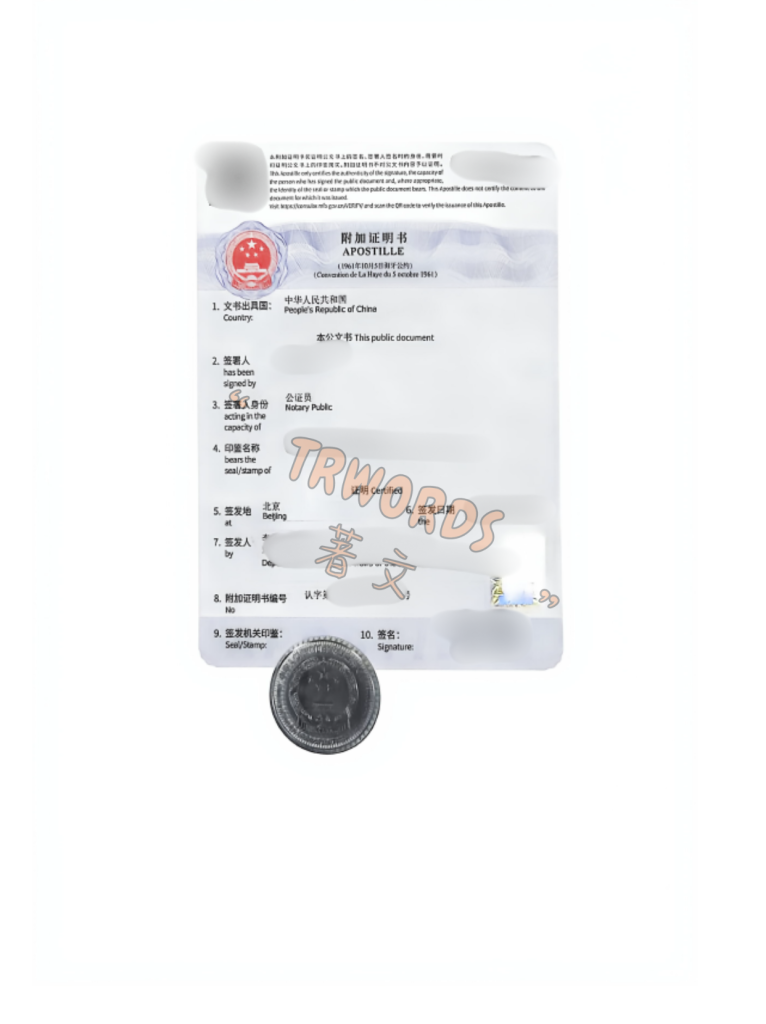
An Apostille is a certification issued under the Hague Convention of 1961 (Convention Abolishing the Requirement of Legalisation for Foreign Public Documents).
Since November 7, 2023, China has officially become a member of the Hague Convention.
This means that:
- Chinese public documents can now be used in other Hague member countries through Apostille.
- Traditional consular legalization (double authentication) is no longer required for Hague countries.
An Apostille confirms:
- The authenticity of the notary’s signature
- The validity of the official seal
- The authority of the issuing official
It does not verify the content of the document itself.
For degree certificates, the Apostille is attached after notarization, making the document legally valid in all Hague Convention member states.
Step-by-Step Procedure: Degree Notarization and Apostille in China
The process generally involves two main stages.
Step 1 – Notarization
The applicant must provide:
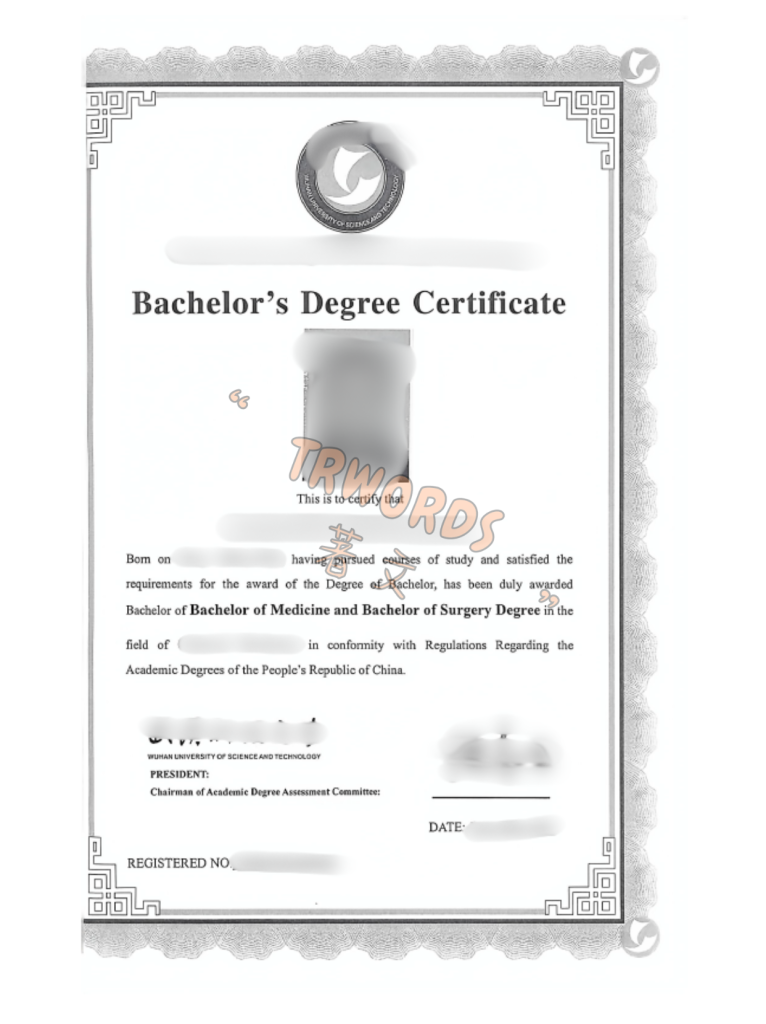
- Original Bachelor’s degree certificate
- Passport
- University graduation proof (if required by the notary office)
The notary office will:
- Verify the authenticity of the degree
- Confirm identity
- Prepare a bilingual notarial certificate
Processing time is typically 3–5 working days.
Step 2 – Apostille
After notarization, the document is submitted to:
- The Ministry of Foreign Affairs (MFA) of China
- Or an authorized provincial Foreign Affairs Office
The authority will issue an Apostille certificate attached to the notarial document.
Processing time is usually 3–5 working days, depending on the jurisdiction.
Once completed, the document is legally valid in all Hague member countries.
Is Translation Required?
This is one of the most frequently asked questions.
In general:
- If the original degree certificate is issued only in Chinese, it must be translated into a foreign language.
- Most notarial certificates in China are issued in bilingual format (Chinese and English).
However:
- If the university has issued an official English version of the degree certificate, that version may be used directly for notarization.
- In such cases, separate translation of the original certificate may not be necessary.
It is important to distinguish:
- The original academic certificate
- The notarial certificate
The notarial certificate itself is typically bilingual (Chinese and English), regardless of whether the original certificate is in English.
Applicants are advised to confirm language requirements with the receiving institution before proceeding.
Processing Time and Planning Considerations
Typical timeline:
- Notarization: 3–5 working days
- Apostille: 3–5 working days
- Total estimated time: 6–10 working days
Expedited processing may be available in certain regions.
Applicants should plan ahead, especially when documents are required for:
- University enrollment deadlines
- Visa applications
- Employment onboarding
- Professional licensing procedures
Delays may occur during peak academic seasons.
Remote Handling and International Courier
For international graduates who are no longer physically present in China, the process can still be completed.
In many cases:
- Scanned copies can be submitted online
- Final documents can be shipped internationally via DHL or UPS
This ensures that former students can obtain legalized documents without returning to China.
Common Questions Regarding Degree Notarization and Apostille
Do I need to be physically present in China?
Not necessarily. Many cases can be handled remotely, depending on document type and regional requirements.
Is Apostille always sufficient?
If the destination country is a Hague Convention member, Apostille is sufficient.
If the country is not a member, traditional consular legalization may still be required.
Does Apostille expire?
The Apostille itself does not have an expiration date.
However, some receiving institutions may impose validity requirements on certain documents.
Who Typically Requires This Service?
Degree notarization and Apostille in China are commonly required by:
- International graduates of Chinese universities
- Students applying for postgraduate study abroad
- Professionals seeking overseas employment
- Applicants for immigration or long-term residence
- Individuals applying for credential recognition
The procedure is particularly relevant for Bachelor’s degree holders who completed their education in China and need internationally recognized documentation.
Professional Degree Notarization and Apostille Services
Navigating notarization and Apostille requirements can be complex, especially for individuals unfamiliar with Chinese administrative procedures.
Professional handling typically includes:
- Preliminary document review
- Coordination with foreign-related notary offices
- Translation support (if required)
- Apostille submission
- Secure international courier delivery
Clear communication and accurate document preparation significantly reduce the risk of rejection or delay.
Conclusion
As international academic mobility increases, proper legalization of Chinese academic documents has become essential.
For Bachelor’s degree holders and other graduates of Chinese universities, the standard procedure involves:
- Degree certificate notarization
- Apostille issuance under the Hague Convention
Understanding the distinction between notarization, translation, and Apostille is critical to ensuring smooth cross-border document recognition.
With appropriate preparation and professional coordination, the process can be completed efficiently and securely, allowing graduates to focus on their next academic or professional step abroad.