
If you are a foreign national living in China, studying in China, working in China, or handling family matters here, there may come a time when you need to use a Chinese document in another country.
You may need to use a Chinese marriage certificate for a spouse visa, a Medical Certificate of Birth for your child’s citizenship or registration abroad, a Chinese degree certificate or transcript for further study overseas, or a certificate of no criminal record for immigration, employment, or residence applications. In other cases, you may need a notarized Chinese translation of your foreign passport for use inside China.
In all of these situations, one question usually comes up very quickly: what is the correct way to prepare the document so it will be accepted?
The answer often involves one or more of the following steps: Chinese notarization, Apostille, or consular legalization. The correct route depends on where the document was issued, where it will be used, and what the receiving authority requires.
This guide explains how the process works in China, what materials are usually needed, what types of documents can be handled, and how online processing can help foreign applicants complete the process more easily.
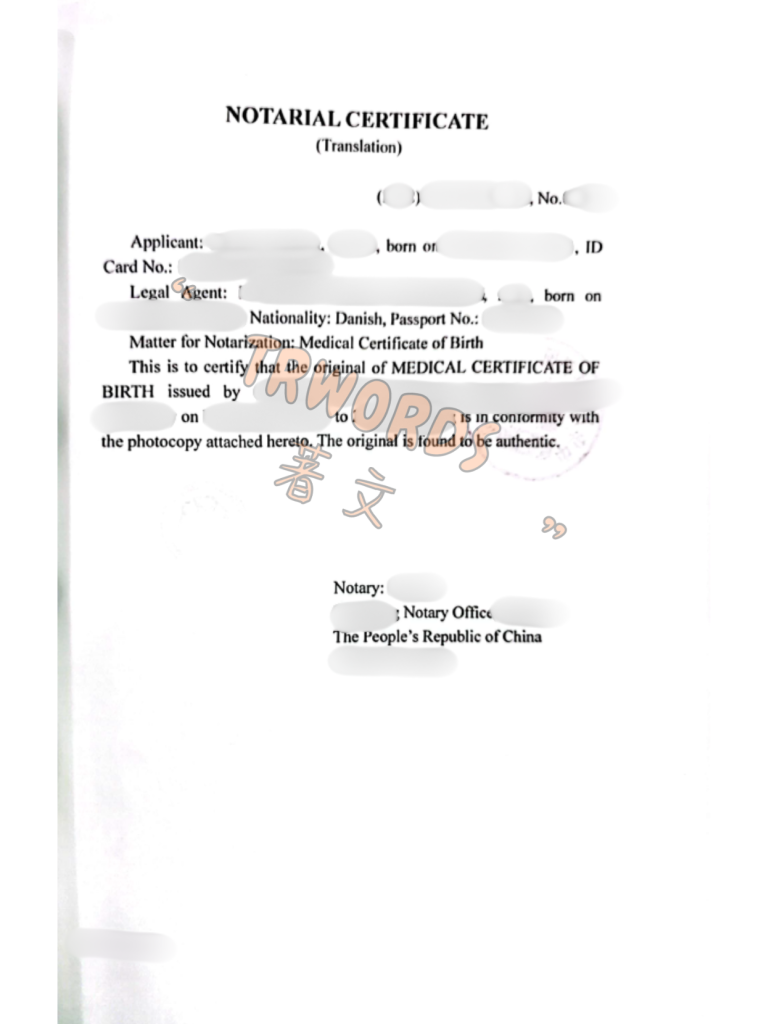
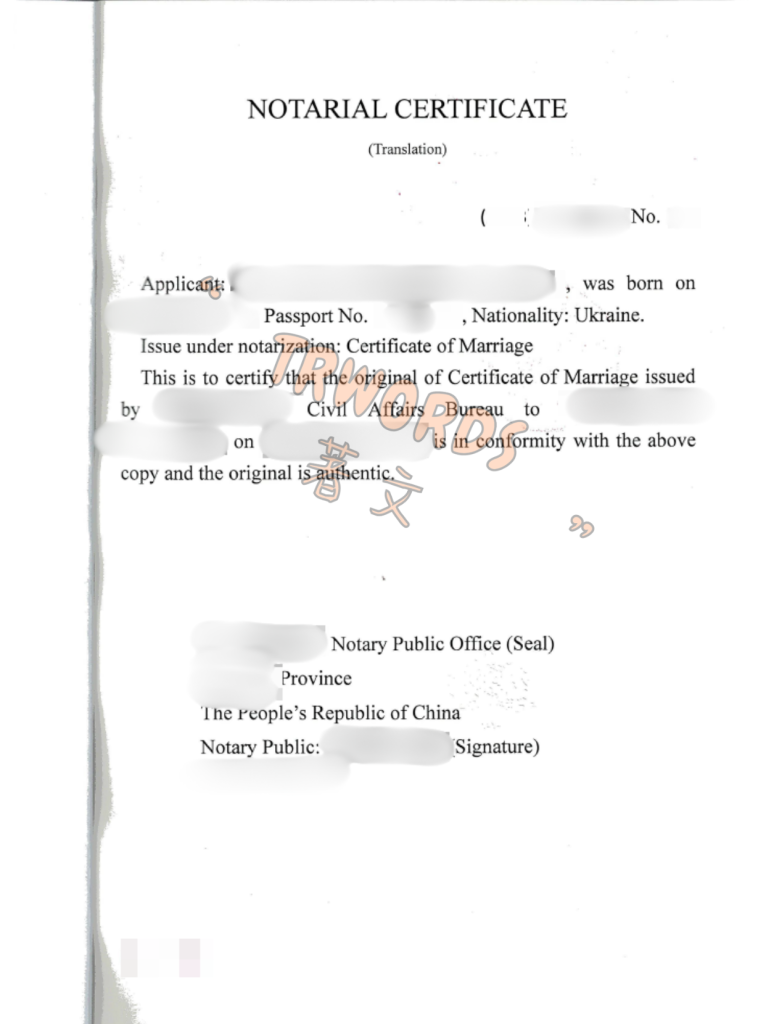
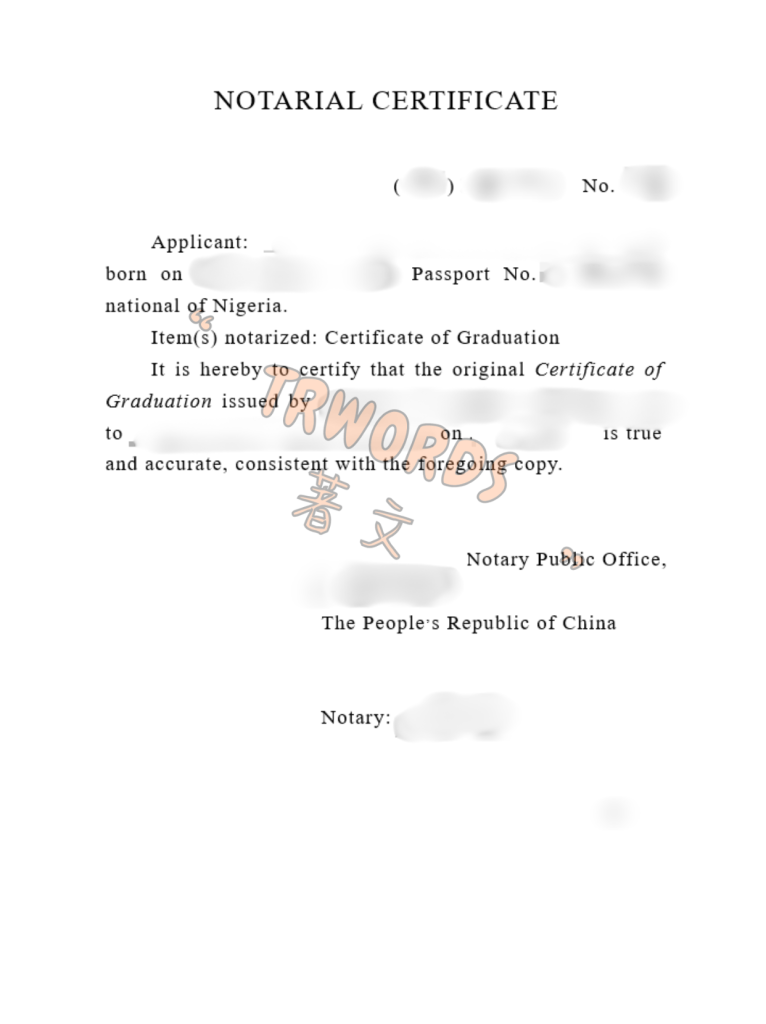
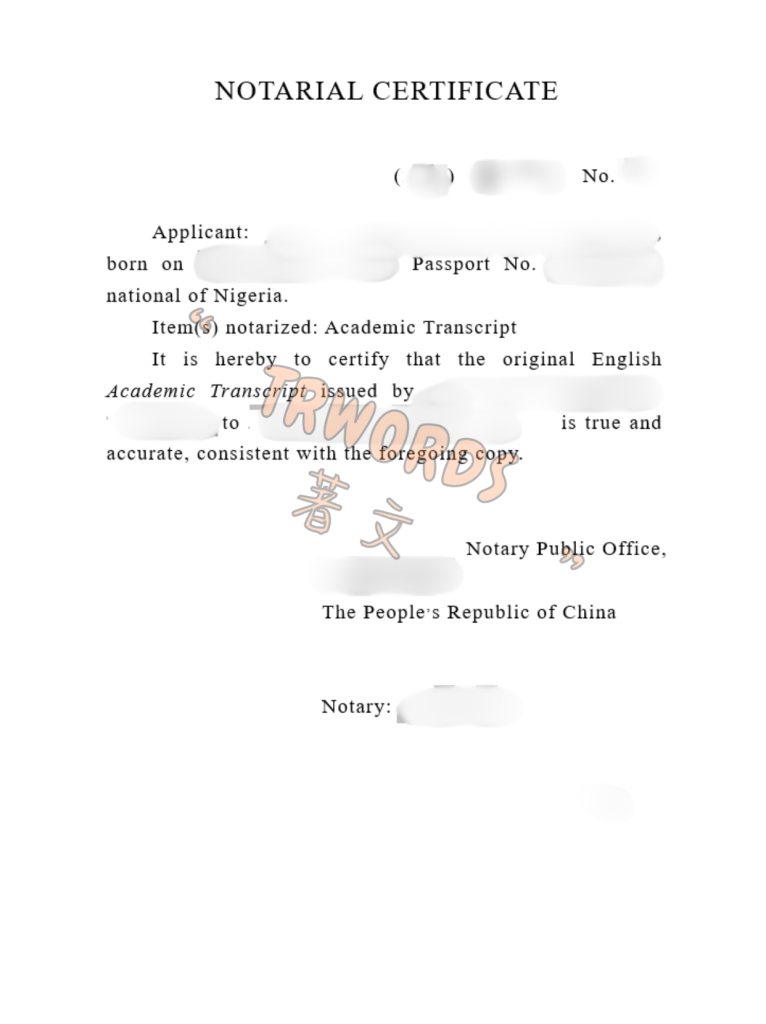
I. Why Foreigners Often Need Chinese Notarization or Legalization
Chinese-issued documents usually cannot be used overseas in their original form alone. Even if the underlying document is valid in China, the authority abroad may require additional formal steps before it will accept the document.
Common situations include:
- using a Chinese marriage certificate overseas after getting married in China
- using a Medical Certificate of Birth issued in China for citizenship, immigration, family registration, or passport applications abroad
- using a Chinese diploma, degree certificate, or academic transcript for school applications, credential evaluation, licensing, or work overseas
- using a Chinese certificate of no criminal record for immigration, employment, or long-term residence abroad
- signing a power of attorney or declaration in China for use in another country
- preparing a notarized Chinese translation of a foreign passport for use in China, such as company registration, property transactions, banking, marriage-related filings, or administrative procedures
In practice, the receiving institution often wants more than the original document itself. It may require a Chinese notarial certificate, an Apostille, embassy legalization, an official translation, or a combination of these.
II. What Notarization, Apostille, and Consular Legalization Mean
These terms are often confused, especially by applicants who are dealing with them for the first time. The easiest way to understand them is to see them as different stages in the outbound use of Chinese documents.
- Chinese notarization
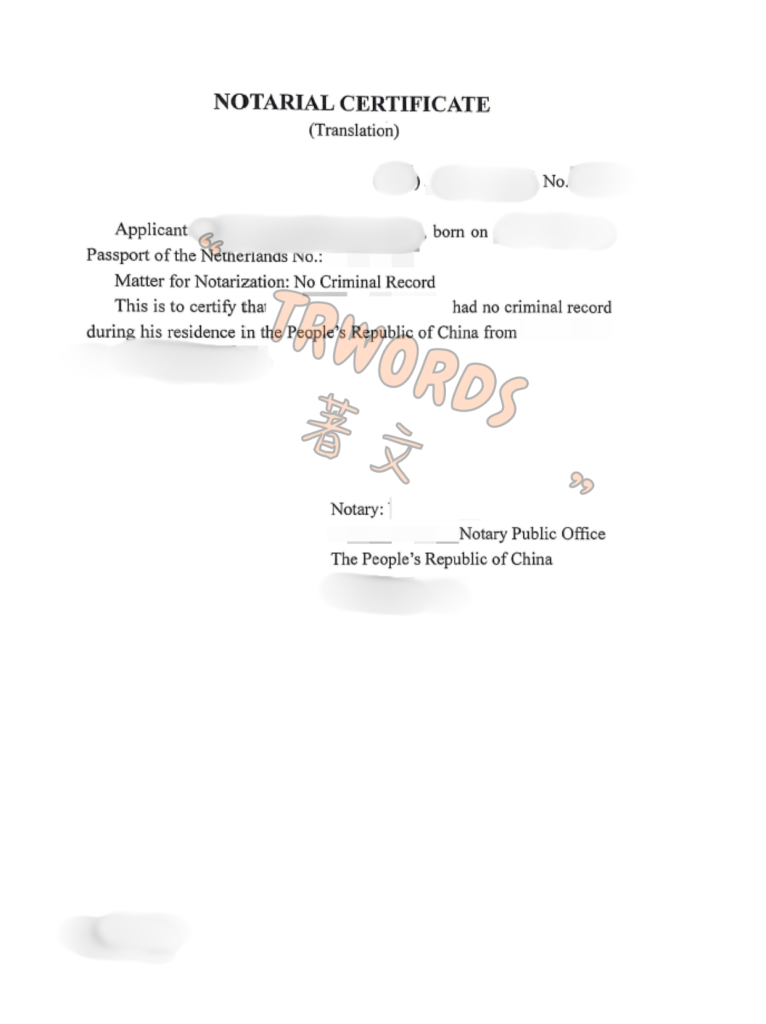
Notarization is usually the first step. A Chinese notary office reviews the applicant’s document and supporting materials, then issues a notarial certificate in the required format.
For outbound use, the notarial certificate often includes a translation or is prepared in bilingual form, depending on the destination country and the requirements of the receiving authority.
In many standard cases, applicants do not need to prepare their own translation in advance because the translation is handled as part of the notarization process.
- Apostille
Apostille is the simplified route for documents that will be used in countries that are members of the Apostille Convention.
Since November 7, 2023, China has implemented the Apostille system. This means that when a Chinese document is going to another Apostille member country, the traditional embassy legalization chain is generally no longer required. Instead, after notarization, the document can be submitted for Apostille through the Ministry of Foreign Affairs or an authorized local Foreign Affairs Office.
This has made the process much simpler for many applicants.
- Consular legalization
If the destination country is not a member of the Apostille Convention, the traditional legalization route still applies.
In these cases, the normal sequence is:
Chinese notarization → authentication by the Ministry of Foreign Affairs (MFA) or an authorized local Foreign Affairs Office (FAO) of China → legalization by the destination country’s embassy or consulate in China
This route is often called consular legalization. In some discussions, you may also hear the terms single authentication and double legalization. In simple terms, the document first goes through the single authentication stage (authentication by the Ministry of Foreign Affairs or an authorized local Foreign Affairs Office of China), and then through the foreign embassy or consulate legalization stage if the receiving country requires it.
III. How to Know Which Route Applies
The first question to ask is very simple: in which country will the document be used?
- If the destination country is a member of the Apostille Convention, the usual route is:
Notarization → Apostille
- If the destination country is not a member of the Apostille Convention, the usual route is:
Notarization → MFA or local FAO authentication → Embassy or consulate legalization
It is still important to confirm the receiving authority’s requirements before you start. Different countries, embassies, schools, employers, immigration offices, and registry authorities may have different expectations about language, format, number of copies, and whether legalization is required at all.
A smooth application usually starts with confirming four things:
- where the document will be used
- whether notarization alone is enough
- whether Apostille or consular legalization is required
- what language and format the receiving authority expects
IV. The Types of Documents We Commonly Handle for Foreign Nationals
Foreign nationals in China often need help with a wide range of personal, academic, and administrative documents. The most common categories include the following.
- Civil status and family documents
If you got married in China and need to use your Chinese marriage certificate abroad, you will usually need marriage certificate notarization first, followed by Apostille or consular legalization depending on the destination country.
If your child was born in China, the Medical Certificate of Birth may also need to be notarized and then legalized or apostilled before it can be used for nationality applications, passport applications, overseas registration, family reunification, or immigration matters.
These documents are often required in cases involving:
- spouse visas
- family reunification
- dependent applications
- immigration filings
- child registration abroad
- proof of family relationship
Where relevant, other family-related declarations or authorization documents may also be prepared in notarized form for overseas use.
- Academic documents
Foreign nationals who studied in China often need to use Chinese education documents outside China.
This commonly includes:
- degree certificate/graduation certificate notarization
- diploma notarization
- academic transcript notarization
- notarization of other education-related records when required
These documents may be used for:
- university or graduate school applications
- credential assessment
- job applications
- licensing and professional registration
- immigration or visa applications
Because different institutions have different rules, it is important to confirm in advance whether the receiving authority requires notarization only, notarization plus Apostille, or full consular legalization.
- No criminal record documents
A Chinese certificate of no criminal record is one of the most frequently requested items for foreigners who previously lived in China and later need proof of their record status for immigration, employment, long-term stay, or other applications abroad.
In most cases, the underlying certificate of no criminal record must first be obtained from the appropriate authority. Once that document is available, it can proceed to notarization and then to Apostille or consular legalization if required by the destination country.
There are different notarial approaches depending on the case. Some applications involve notarization of the no-criminal-record fact itself, while others involve notarization of the police-issued certificate. The correct format depends on the document available and the receiving authority’s requirements.
- Notarized Chinese translation of a foreign passport for use in China
This is a different type of service, because it is aimed at using a foreign document inside China rather than using a Chinese document abroad.
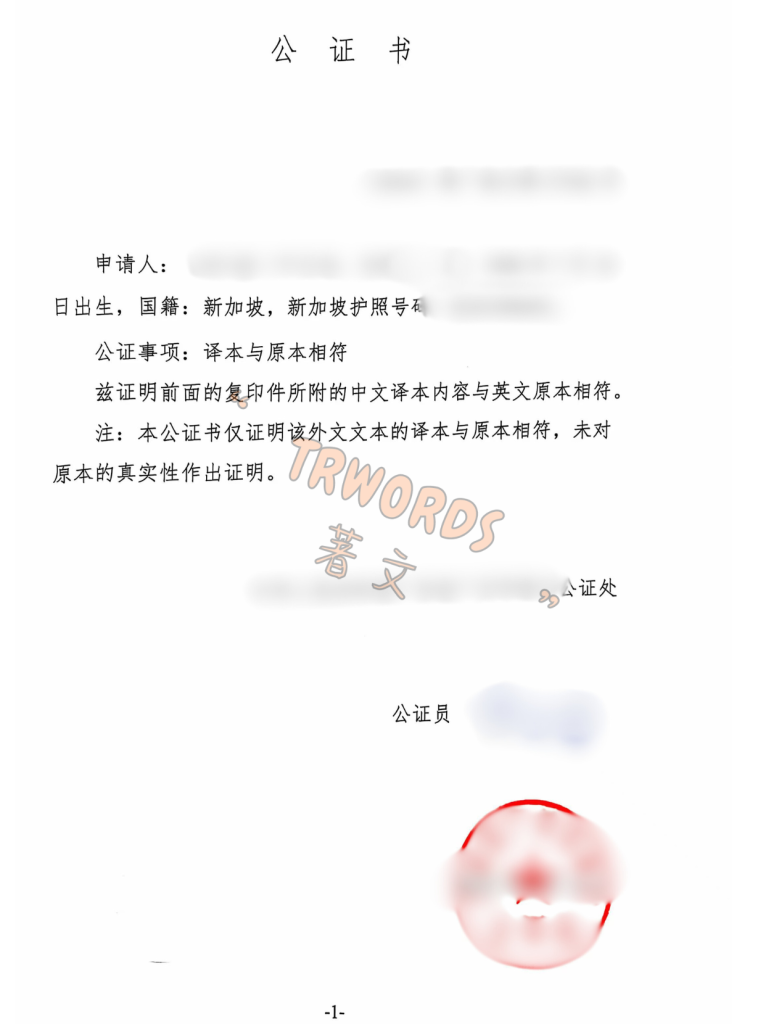
A foreign passport is often accepted as the applicant’s identity document, but many institutions in China still require a Chinese-language version for filing, review, and recordkeeping purposes. In these cases, a notarized Chinese translation of the passport may be needed.
Typical use cases include:
- company formation in China
- serving as a legal representative, shareholder, or director
- property purchase or registration
- banking and loan procedures
- marriage-related formalities
- identity linkage or historical records
- administrative filings
This type of notarization usually focuses on the consistency of the Chinese translation with the original passport text. It is generally a translation notarization rather than a statement about the authenticity of the foreign passport as a foreign public document.
- Powers of attorney, declarations, and other personal documents
Foreign nationals may also need to sign personal documents in China for use overseas.
These may include:
- powers of attorney
- declarations
- affidavits or affidavit-style statements
- authorization letters
- consent documents
The required wording and format can vary by country, authority, and use case. In many cases, it is best to confirm the exact document form with the receiving side before proceeding.
V. How the Notarization and Legalization Process Works in Practice
Although the details vary by document, most cases follow a similar path.
Step 1: Confirm the destination country and requirements
Before starting, it is important to confirm:
- where the document will be used
- whether notarization alone is enough
- whether Apostille or consular legalization is needed
- what language is required
- whether the receiving authority has special requirements for copies, format, or wording
Step 2: Prepare and submit the required materials
The exact materials depend on the document type, but applicants usually need:
- a valid passport or other travel document
- the original Chinese document or a clear scan, depending on the case
- supporting materials requested by the notary office
For many common cases, especially when handled remotely, clear scans are enough for preliminary review and document preparation. Whether original paper documents are needed later depends on the case and the processing route.
Step 3: Chinese notarization
The notary office reviews the materials and issues the notarial certificate in the appropriate format.
For many documents going abroad, the notarial certificate includes the necessary translation. This is one reason the notarization stage is so important: it is not just a stamp on the original document, but a formal certificate prepared for cross-border use.
Step 4: Apostille or consular legalization
If the destination country is a member of the Apostille Convention, the notarized document is submitted to the Ministry of Foreign Affairs or an authorized local Foreign Affairs Office for Apostille.
If the destination country is not a member of the Apostille Convention, the notarized document is first authenticated by the Ministry of Foreign Affairs or an authorized local Foreign Affairs Office, and then legalized by the relevant foreign embassy or consulate in China.
Step 5: Delivery of the finished documents
Once the above process is completed, the finished documents can be sent by courier to the applicant or to another designated address.
VI. Typical Notarization Materials by Document Type
The following is a general overview. Exact requirements may vary by notary office and by case.
- Degree certificate, graduation certificate, diploma, or transcript notarization
Common materials include:
- passport
- degree certificate, graduation certificate, diploma, or transcript
- additional supporting records if requested by the notary office
In many cases, clear scans can be reviewed first for online processing.
- Notarization of no criminal record/certificate of no criminal record
Common materials include:
- passport
- Chinese certificate of no criminal record
- other supporting identity or residence documents if required
Because this category can be format-sensitive, it is helpful to confirm the destination authority’s expectations in advance.
- Chinese marriage certificate notarization
Common materials include:
- Chinese marriage certificate
- passports or identity documents of the spouses
- additional materials if required by the notary office
- Notarization of Medical Certificate of Birth
Common materials include:
- Medical Certificate of Birth issued in China
- passports or identity documents of the parents
- any additional documents required for the destination country’s use scenario
- Passport translation notarization
Common materials include:
- scan of the passport information page
- Chinese name, if needed for the intended use in China
- other pages if specifically required by the receiving authority
VII. Online Notarization and Legalization Services in China
For many foreign applicants, online handling is a convenient and fast choice.
You may be living in a different city, outside China, or simply unable to visit a notary office in person. In many standard document categories, remote handling is possible and much more convenient.
Common matters that are often suitable for online processing of notarization and legalization include:
- academic documents notarization
- Chinese marriage certificate notarization
- Medical Certificate of Birth notarization
- passport translation notarization
- many standard civil documents for overseas use
In a typical remote workflow, the process looks like this:
- send scans or clear images of the required documents for review
- confirm the destination country and document requirements
- proceed with notarization
- proceed with Apostille or consular legalization if required
- receive the finished documents by courier
This type of one-stop handling is especially helpful when the case involves several linked stages and the applicant wants to avoid dealing with multiple offices separately.
VIII. Processing Time for Notarization/Apostille/Consular Legalization
Timing depends on the document type and the destination country, but general expectations are as follows.
For many standard notarial matters, notarization is commonly completed in about 5 working days, with rush handling available in some cases.
For Apostille, the usual timeframe is around:
standard processing: about 5 working days
expedited processing: about 3 working days
For consular legalization, timing is more variable because it depends on the destination country and the specific embassy or consulate involved. Embassy processing times are not always predictable, so it is wise to start early and leave extra time where possible.
IX. Important Points to Keep in Mind
There are several common misunderstandings that can delay an application.
First, China can only Apostille or legalize documents issued in China. If a document was issued in another country, it generally must be handled in the country where it was issued. A foreign-issued academic certificate, for example, cannot normally go through the Chinese Apostille or consular legalization system as if it were a Chinese document.
Second, different receiving authorities may ask for different formats. Even when two documents are headed to the same country, a school may ask for one form while an immigration authority asks for another. It is always better to confirm the requirements before starting.
Third, legalization generally confirms the authenticity of the last signature and seal in the chain. It does not certify the substantive truth of the underlying facts in a broad sense. This is one reason the correct format and supporting materials at the notarization stage matter so much.
Fourth, translation requirements are not always identical. Some receiving authorities accept standard bilingual notarial certificates, while others want a specific language or a specific presentation format.
X. A Practical One-stop Solution for Foreigners Using Chinese Documents Abroad
In most cases, the key is to identify the destination country, confirm the receiving authority’s requirements, prepare the right supporting materials, complete Chinese notarization, and then move on to Apostille or consular legalization if needed.
Whether you need help with a Chinese marriage certificate, Medical Certificate of Birth, degree certificate, transcript, certificate of no criminal record, passport translation notarization, or another personal document, a coordinated service can make the process much more straightforward.
For applicants who are outside the city, outside China, or unfamiliar with the local procedures, online handling can be a practical way to complete notarization, Apostille, and consular legalization step by step, with the final documents delivered directly by courier.