
If you have lived, worked, studied, or stayed in China, you may be asked to provide a China police clearance certificate when applying for immigration, a visa, a work permit, professional registration, residence, or citizenship in another country.
In many cases, the certificate must also be notarized and apostilled before it can be accepted overseas.
This document is commonly referred to in English as a China police clearance certificate, Chinese police certificate, China no criminal record certificate, certificate of no criminal record, or non-criminal record certificate. Although these terms may sound slightly different, they usually refer to the same type of document: proof of whether a person has a criminal record during a certain period of residence in China.
For overseas applicants, the process can be confusing. You may need to deal with the local police authority, a Chinese notary office, the Apostille authority, or consular legalization, depending on where the document will be used.
This guide explains how China police clearance certificate apostille works, when notarization is required, what documents are usually needed, and whether the process can be handled remotely if you are no longer in China.
What Is a China Police Clearance Certificate?
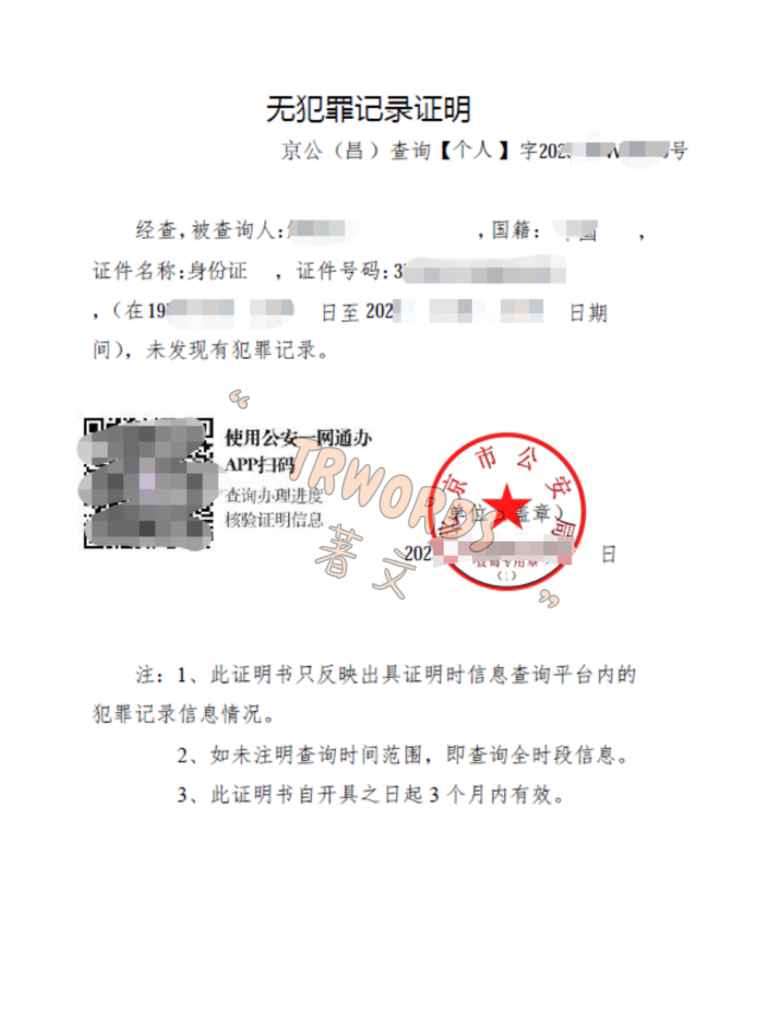
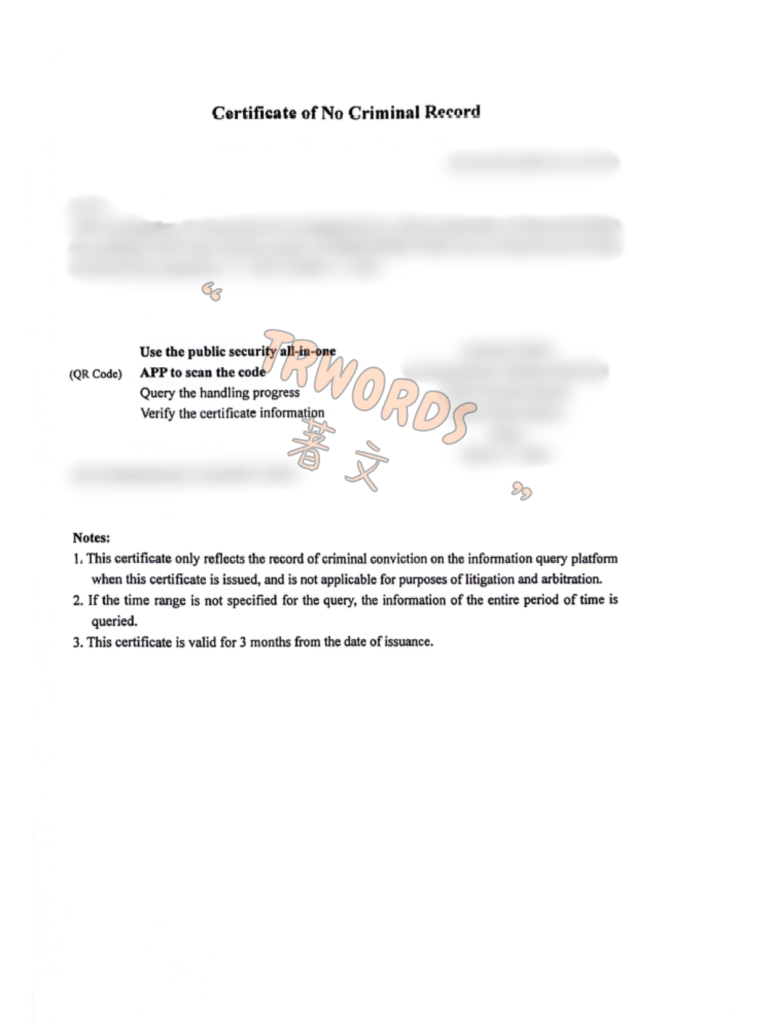
A China police clearance certificate is a document used to show whether a person has a criminal record in China during a specific period. It is usually based on records held by the local public security authority in the city where the applicant lived, worked, studied, or was officially registered.
For foreigners, this document is often requested when applying for:
- immigration or permanent residence,
- work permits or employment screening,
- student visas or university admission,
- professional licensing,
- teacher registration,
- medical or nursing board registration,
- citizenship applications,
- marriage-related procedures,
- or other government and legal matters overseas.
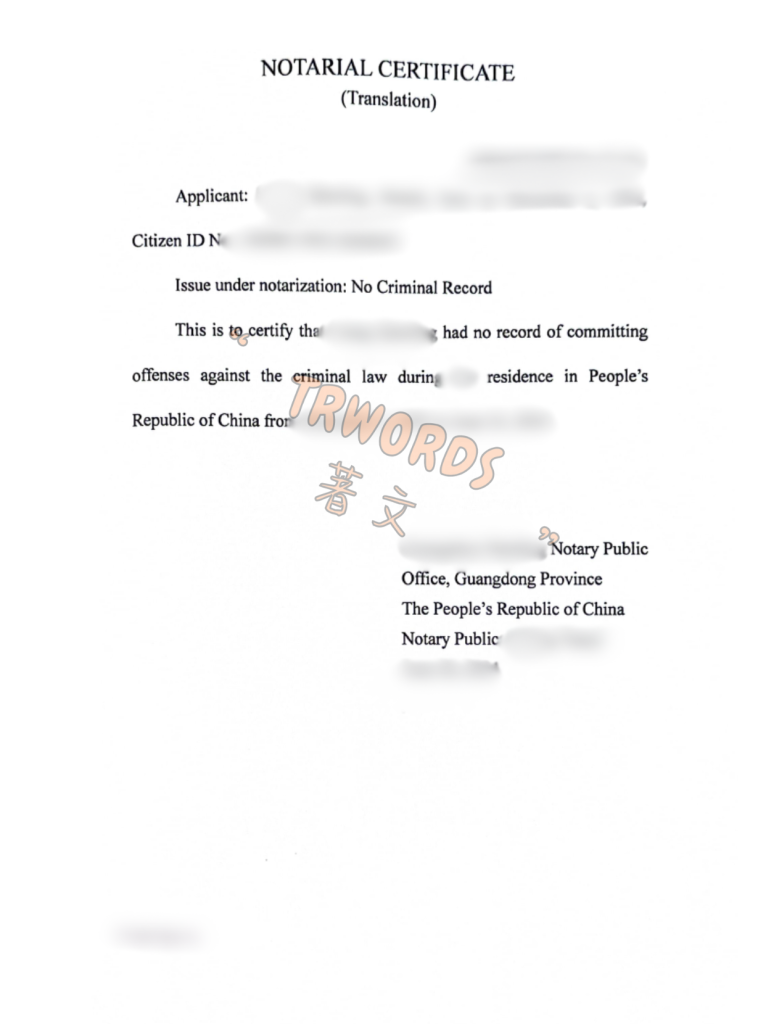
In China, the document may first be issued as a no criminal record certificate by the relevant public security authority. For overseas use, it is often converted into a notarized document by a Chinese notary office. The notarized certificate may include an English translation, depending on the requirements of the receiving authority.
Because requirements vary by city and by destination country, it is important to check the document route before starting the process.
When Do You Need a China Police Clearance Certificate Apostille?
You may need a China police clearance certificate apostille if the document will be submitted to an authority in a country that accepts Apostille documents.
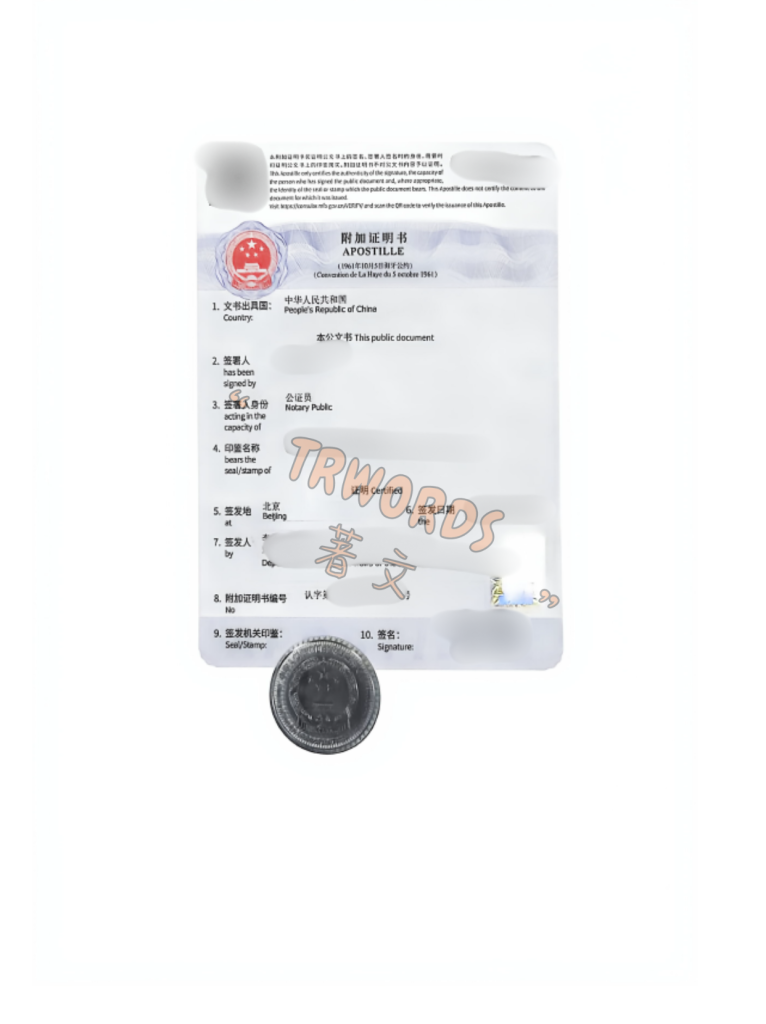
An Apostille is used to verify the authenticity of the signature, seal, or official capacity on a public document. Since the Apostille Convention entered into force for China on November 7, 2023, Chinese public documents sent to other contracting countries can generally be used with an Apostille, without the traditional embassy or consular legalization process.
Common situations where a China police clearance apostille may be required include:
- immigration applications,
- visa applications,
- residence permit applications,
- employment background checks,
- professional qualification recognition,
- teacher registration,
- healthcare licensing,
- study abroad applications,
- and long-term relocation procedures.
For example, if a foreign applicant previously worked in China and is now applying for immigration or professional registration abroad, the receiving authority may ask for a notarized and apostilled China police clearance certificate.
Do You Need Notarization Before Apostille in China?
In many cases, yes.
For Chinese documents used abroad, Apostille is often applied to the notarized certificate rather than directly to the original police clearance document. This means the process may involve two separate steps:
First, the no criminal record certificate is issued or verified through the relevant Chinese authority.
Then, a Chinese notary office prepares a notarized certificate for overseas use. After notarization, the notarized document can be submitted for Apostille.
This is an important point for overseas applicants. Many people assume that the police clearance certificate itself can be apostilled directly. In practice, the receiving country may expect a notarized version, especially when an English translation is needed.
The exact format may depend on the receiving authority. Some authorities may require a notarized certificate of no criminal record. Others may ask for a notarized copy of the police clearance certificate with translation. In some cases, the wording, translation language, certificate format, and validity period can all matter.
Before applying, you should confirm three things:
- what type of police clearance document is required,
- whether notarization is needed before Apostille,
- and whether the destination country accepts Apostille or still requires consular legalization.
China Police Clearance Apostille Process
The process can vary depending on the city where the applicant lived and the country where the document will be used. However, the general route usually follows these steps.
Step 1: Confirm the Destination Country
Before preparing the document, check where it will be used.
If the destination country accepts Apostille, the document will usually need notarization followed by Apostille in China.
If the destination country does not accept Apostille, the document may need consular legalization, which usually involves authentication by the Chinese Ministry of Foreign Affairs or an authorized local foreign affairs office, followed by legalization at the destination country’s embassy or consulate in China.
This step matters because Apostille and consular legalization are different routes. Choosing the wrong route may cause the document to be rejected by the receiving authority.
Step 2: Check Eligibility for the Police Clearance Certificate
For foreigners, eligibility may depend on the length of stay, visa type, residence permit records, temporary residence registration, and local practice in the city where they lived.
Some cities may require evidence that the applicant lived in China continuously for a certain period. Other cities may look closely at residence permit history, work records, study records, or temporary residence registration forms.
If you lived in more than one city in China, you may need to check whether the certificate can cover the full period or only the period registered in one city.
Step 3: Prepare the Required Documents
The required documents may vary, but common items include:
- passport information page,
- previous Chinese visas,
- Chinese residence permits,
- entry and exit stamps,
- temporary residence registration form,
- work permit or employment records,
- school certificate or study records,
- the original no criminal record certificate, if already obtained,
- and a power of attorney if someone is handling the process on your behalf.
If you used more than one passport while living in China, the previous passport may also be required.
For Chinese citizens, the process may involve identity documents, household registration documents, residence records, and an authorization document if handled by a family member or representative.
Step 4: Apply for the No Criminal Record Certificate
Depending on the city, the application may be handled through the local public security authority, the exit-entry administration office, or in some cases through a notary office that coordinates the record check.
This is one area where China police clearance procedures can vary significantly by location. The process in Beijing may differ from the process in Shanghai, Guangzhou, Shenzhen, Hangzhou, or other cities.
Because of these local differences, it is better to check the requirements of the city where you actually lived, rather than relying on general information online.
Step 5: Apply for Notarization
Once the no criminal record certificate is available, the next step is usually notarization.
The notary office may prepare a notarized certificate for overseas use. Depending on the receiving authority’s requirements, the notarized document may include an English translation or other language translation.
Before notarization, the applicant should check whether the receiving authority has any special requirements about names, passport numbers, coverage period, translation language, document title, or certificate validity.
For example, if your current passport number is different from the passport you used while living in China, this may need to be handled carefully in the notarized certificate or supporting documents.
Step 6: Apply for Apostille in China
After notarization, the notarized police clearance certificate can be submitted for Apostille in China.
The Apostille is issued by the competent authority in China. For documents issued within specific provinces or municipalities, authorized local foreign affairs offices may handle Apostille applications for documents within their jurisdiction. The Ministry of Foreign Affairs has also stated that it is the competent authority for issuing Apostilles in China, and that authorized local foreign affairs offices may issue Apostilles for documents produced within their administrative regions.
Once the Apostille is attached, the document can generally be submitted to the receiving authority in an Apostille Convention country.
Step 7: Check the Completed Document
Before sending the document overseas, carefully check:
- the applicant’s name,
- passport number,
- date of birth,
- coverage period,
- notarization wording,
- translation,
- Apostille information,
- and destination country requirements.
Small errors may cause delays, especially in immigration, licensing, or government applications.
Documents Required for China Police Clearance Apostille
The exact document list depends on the applicant’s nationality, city of residence, visa history, and current location. However, the following documents are commonly requested:
- passport information page,
- copies of Chinese visas,
- copies of Chinese residence permits,
- entry and exit stamps,
- temporary residence registration form,
- work permit, employment contract, or employer letter,
- student records, diploma, or school certificate,
- previous passport, if applicable,
- application form,
- power of attorney, if handled by a representative,
- and the police clearance or no criminal record certificate, if already issued.
For applicants who are already outside China, a signed power of attorney may be needed.
If some records are missing, such as old temporary residence registration forms or previous passports, the case may still be reviewed, but additional supporting evidence may be needed. Acceptance depends on local requirements.
Can You Apostille a China Police Clearance Certificate from Overseas?
In many cases, the process can be started while the applicant is overseas.
If you are no longer in China, you may be able to authorize a representative or service provider to assist with document review, police clearance application, notarization, Apostille, and international shipping.
However, remote handling depends on several factors:
- whether the no criminal record certificate has already been issued,
- whether the city allows an authorized representative to apply,
- whether your residence and visa records are complete,
- whether original documents are required,
- and whether the receiving authority has special requirements.
If you already have a no criminal record certificate from China, the remaining process may involve notarization and Apostille.
If you do not yet have the certificate, the first step is to check whether it can be obtained based on your previous stay in China.
For overseas applicants, it is usually helpful to prepare scanned copies first. A preliminary review can identify missing documents, possible city-specific issues, and whether the case can proceed remotely.
Apostille or Consular Legalization: Which One Do You Need?
Whether you need Apostille or consular legalization depends on the destination country.
If the document will be used in an Apostille Convention country, a notarized China police clearance certificate can usually be apostilled for overseas use.
If the document will be used in a country that does not accept Apostille, consular legalization may be required. This usually means the document must first go through notarization, then authentication by the Chinese Ministry of Foreign Affairs or an authorized local foreign affairs office, and then legalization by the destination country’s embassy or consulate in China.
Some receiving authorities use terms such as authentication, legalization, attestation, embassy legalization, or consular legalization. These terms are sometimes used loosely, so it is important to confirm exactly what the authority wants.
If the instruction says “Apostille,” the document is usually intended for an Apostille Convention country.
If the instruction says “embassy legalization” or “consular legalization,” the destination may require the traditional legalization route.
How Long Does China Police Clearance Apostille Take?
Processing time depends on the city, document status, notary office, Apostille authority, and whether urgent service is available.
If the no criminal record certificate has not yet been issued, the process may take longer because the police clearance step comes first.
If the certificate is already available and all documents are complete, the process may move faster, but notarization and Apostille still take additional working days.
In general, applicants should allow enough time for:
- document review 1 working day,
- police clearance application 3-5 working days,
- notarization 5-7 working days,
- Apostille 5 working days or legalization 2-5 weeks,
- and international shipping, if the applicant is overseas.
If you have an immigration, visa, employment, or licensing deadline, it is better to start early. Some authorities also require the police clearance certificate to be issued within a recent period, such as the last three or six months, so timing should be planned carefully.
Common Issues with China Police Clearance Apostille
Missing Residence Records
Temporary residence registration is often important for foreigners who lived in China. If you no longer have the registration form, alternative evidence may be reviewed, but acceptance varies by city.
Different Passports
If you used an old passport while living in China and now hold a new passport, both passports may be relevant. The notary office or receiving authority may need to see how the records connect.
Different City Requirements
Police clearance procedures are not identical across China. Some cities process applications through the local public security authority. Others may involve a notary office at an earlier stage. Local practice can affect both eligibility and processing time.
Wrong Authentication Route
A document prepared for Apostille may not be accepted by a country that requires consular legalization. Likewise, embassy legalization is generally not needed for many Apostille Convention countries. Confirming the destination country’s requirement early can save time.
China Police Clearance Apostille Service for Foreigners and Overseas Applicants
Our service may include:
- checking whether Apostille or consular legalization is required,
- reviewing your passport, visa, , and residence permit,
- assisting with notarization arrangements,
- handling Apostille applications in China,
- arranging consular legalization where required,
- and shipping completed documents domestically or internationally.
If you are outside China, you can send scanned copies first for review. We will check your document status, previous city of residence, destination country, and possible handling route before advising the next steps.
To start, please provide:
- your nationality,
- the city or cities where you lived in China,
- your period of stay,
- your visa or residence permit type,
- whether you already have a no criminal record certificate,
- and the country where the document will be used.
Frequently Asked Questions
Can a China police clearance certificate be apostilled?
Yes, in many cases a China police clearance certificate can be apostilled for use in an Apostille Convention country. In practice, the document usually needs to be notarized first, and the Apostille is then applied to the notarized certificate.
Is a China no criminal record certificate the same as a police clearance certificate?
In many overseas applications, these terms are used for similar purposes. A China no criminal record certificate, Chinese police certificate, police clearance certificate, and certificate of no criminal record usually refer to a document showing whether a person has a criminal record in China during a certain period.
Do I need notarization before Apostille in China?
In many cases, yes. For overseas use, the police clearance document is often notarized by a Chinese notary office before it is submitted for Apostille. The notary office may also prepare or include the required translation.
Can I handle China police clearance apostille from overseas?
Most of cases can be reviewed remotely first.
What documents are required for China police clearance apostille?
Commonly required documents include passport copies, Chinese visas, residence permits, temporary residence registration forms, the no criminal record certificate.
Do I need Apostille or embassy legalization?
It depends on the destination country. If the document will be used in an Apostille Convention country, Apostille is usually the correct route. If the destination country does not accept Apostille, consular legalization or embassy legalization may be required.
How long does China police clearance apostille take?
Notarization and apostille normally take 8-10 working days.
Can I use an old China police clearance certificate?
The validity of China police clearance certificate is normally 3 months.