
The Applicant’s Background
The applicant was born in Shanghai before moving to Australia with her family. After becoming an Australian citizen, she needed formal proof of her birth in China for use in France.
Her current identity was shown on an Australian passport, while her birth and early household records remained connected to her former Chinese name and Chinese identity documents. The application therefore required evidence of both her birth and the link between her former Chinese identity and current Australian identity.
Birth Notarization or Notarization of a Medical Certificate of Birth?
These two forms of notarization are often confused, although they certify different matters.
A Notarial Certificate of Birth directly records the applicant’s date and place of birth and the names of the applicant’s parents. It is a fact-based notarization issued after the notary office reviews the available birth, family and identity records.
A Notarization of a Medical Certificate of Birth concerns the document itself. The notarial certificate normally includes a copy of the Medical Certificate of Birth and certifies the relevant document presented by the applicant. Chinese judicial authorities distinguish this document-based notarization from a birth notarization that directly certifies the facts of birth.
For the French procedure involved in this case, a Notarial Certificate of Birth was sufficient. The certificate directly stated the applicant’s birth details and her parents’ names, so a separate notarization of the Medical Certificate of Birth was not required.
Reconstructing the Birth Record
China formally introduced the nationally standardized Medical Certificate of Birth on January 1, 1996. Applicants born from that period onward can usually provide this document as important evidence of their birth and parentage.
Applicants born before 1996 may never have received a Medical Certificate of Birth. In those cases, the notary office can review other official evidence showing the applicant’s relationship with the parents, such as information recorded in the parents’ personnel files or a certificate of birth or family relationship issued by the police station at the former place of household registration.
The evidence must normally show more than the applicant’s date of birth. It should also help establish the names of the parents and the parent-child relationship that will appear in the final birth notarial certificate.
Linking the Former Chinese and Current Australian Identities
The Australian passport showed the applicant’s current nationality and identity, but it did not by itself explain the Chinese name, identity number or passport details appearing in her earlier records. A separate document chain was therefore needed to connect the two identities.
For this case, the identity evidence included an apostilled same-person declaration confirming that her former Chinese identity and current Australian identity referred to the same individual. Her Australian citizenship certificate, household registration cancellation certificate and former Chinese documents provided further support.
The main identity documents included:
- current Australian passport;
- Australian citizenship or naturalization certificate;
- apostilled same-person declaration;
- household registration cancellation certificate;
- former Chinese passport;
- former Chinese identity card;
- former household register.
Where the applicant’s parents had also naturalized and their names had changed, the notary office could require additional documents linking their former Chinese identities with their current foreign identities. This is especially relevant when the names shown on the parents’ marriage certificate or old household records differ from their current passport names.
Other Supporting Documents
The parents’ marriage certificate was also included in the application materials. Together with the former household and identity records, it helped the notary office review the parents’ names and the family information recorded at the time of the applicant’s birth.
Chinese-French Birth Notarial Certificate
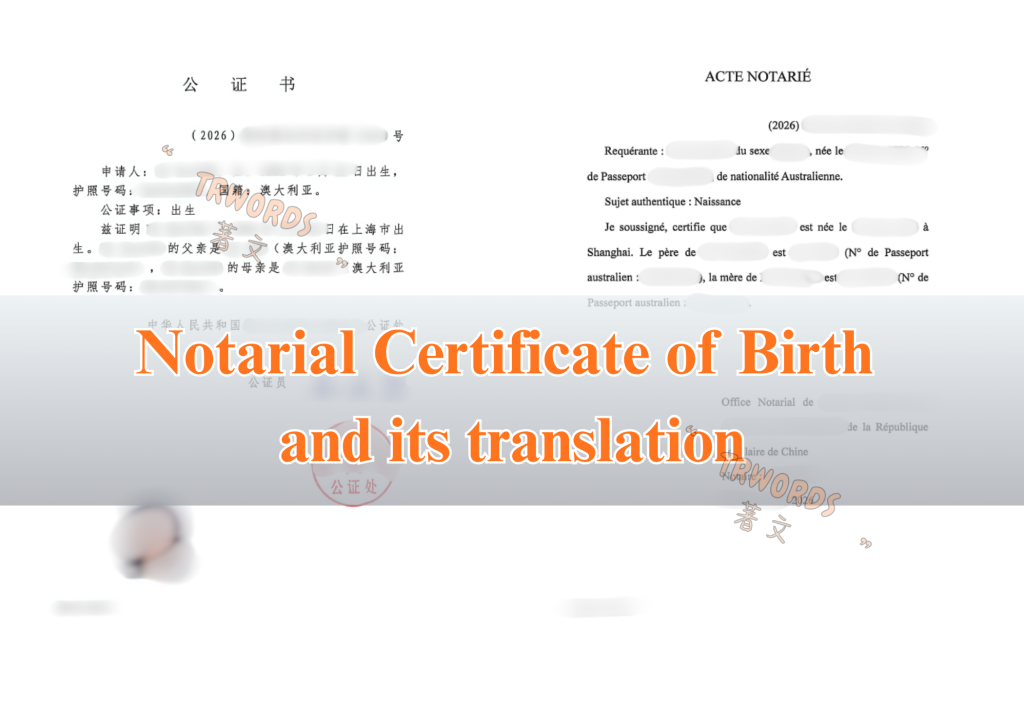
For use in France, the birth notarial certificate was prepared in Chinese and French. The bilingual certificate recorded the applicant’s name, date and place of birth and the names of her parents.
The certificate also included the applicant’s photograph, as required for this France-use birth notarization. The photograph was affixed to the notarial certificate and embossed with the notary office’s seal.
Using a Chinese-French notarial certificate allowed the French receiving authority to review the content directly. The applicant still needed to confirm whether the particular French procedure required any additional translation or recently issued civil-status documents.
China Apostille for Use in France
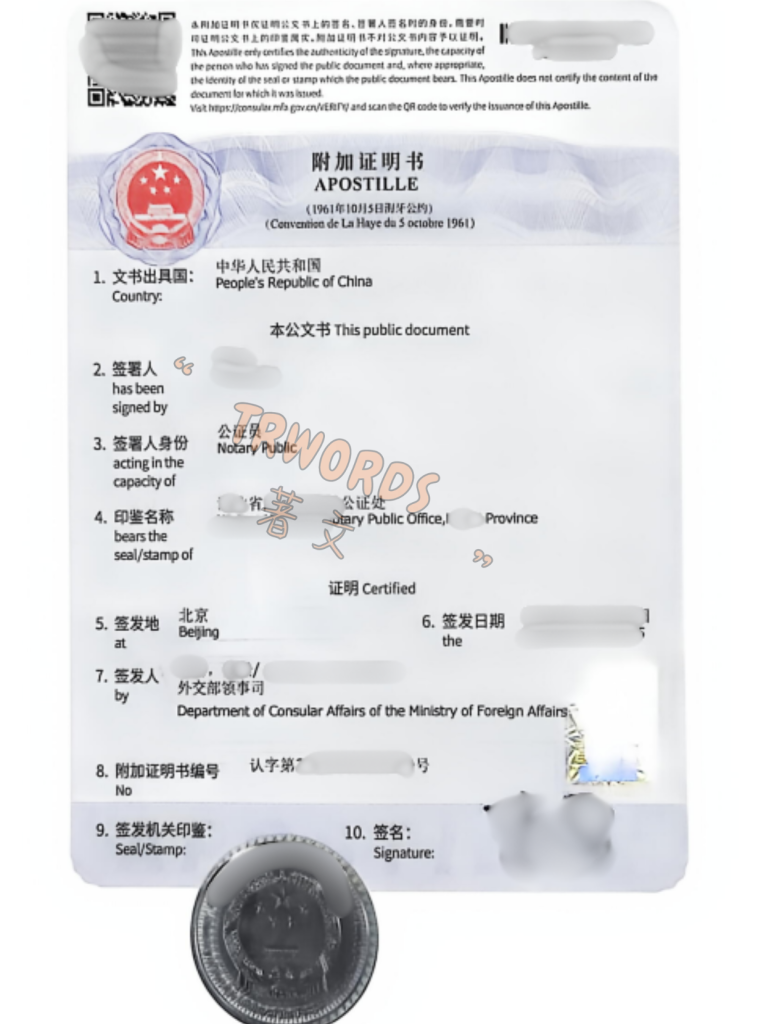
After the birth notarial certificate was issued, it was submitted for a China Apostille. The document route was:
Chinese birth notarization → Chinese-French notarial certificate → China Apostille → Use in France
The Apostille Convention has applied between China and France since November 7, 2023. For most documents covered by the Convention, a China Apostille replaces the former legalization procedure between the two countries.
The Apostille authenticates the signature, official capacity and seal appearing on the Chinese notarial certificate. The French authority receiving the document remains responsible for deciding whether the content and document type meet the requirements of the specific procedure.
Conclusion
This case involved more than obtaining proof that the applicant had been born in Shanghai. The notary office also needed a clear link between her former Chinese identity, her current Australian identity and the family records naming her parents.By combining birth evidence, former Chinese documents, Australian naturalization records and an apostilled same-person declaration, the applicant could establish a complete identity and family record. The resulting Chinese-French birth notarial certificate was then apostilled for use in France.
Pls feel free to contact us if you have any questions.