
Many former Chinese citizens now use a foreign passport, while their earlier records in China remain registered under a Chinese name, Chinese ID number or former Chinese passport number. Years later, they may need to prove that the person named in those old records and the holder of the current foreign passport are the same individual.
This is often described as proving identity continuity or obtaining same-person proof. The right document can connect a person’s former Chinese identity with their current foreign identity.
When Is Same-Person Proof Needed?
One common situation is returning to China to deal with property, inheritance, bank accounts, pensions, company interests or other assets. The Chinese records may still show the person’s former Chinese name and ID details, while the applicant now holds only a foreign passport.
Another situation may arise when a person later acquires citizenship in a different country. During that process, the new authority may ask for a birth certificate or other Chinese record to be legalized, and the applicant may need to show that the person named in the old Chinese document is the same person shown on the current foreign passport.
Why Identity Continuity Can Be Difficult to Prove
Names often change after naturalization. A Chinese name may be converted into pinyin, the order of the family name and given name may change, or the person may adopt a new English name or married surname.
Document numbers also change. Old records may refer to a Chinese ID card or Chinese passport, while the current passport contains no direct reference to those earlier numbers.
When the connection is not clear from the documents themselves, a formal declaration or supporting document chain may be needed.
Documents You Should Try to Keep
The following documents may help establish the link between the former Chinese identity and the current foreign identity:
- current foreign passport;
- naturalization or citizenship certificate;
- former Chinese passport;
- former Chinese ID card;
- household register (户口) or household registration records;
- household registration cancellation certificate(户籍注销证明);
- name change certificate;
- marriage certificate, if the surname changed after marriage;
- old birth, education, employment, property, banking or social security records.
Three Ways to Obtain Same-Person Proof
There are three common routes. Each route can establish that the former Chinese identity and the current foreign identity belong to the same person, although the receiving authority has the final say on which format it will accept.
Prepare a Same-Person Declaration in the Current Country of Citizenship
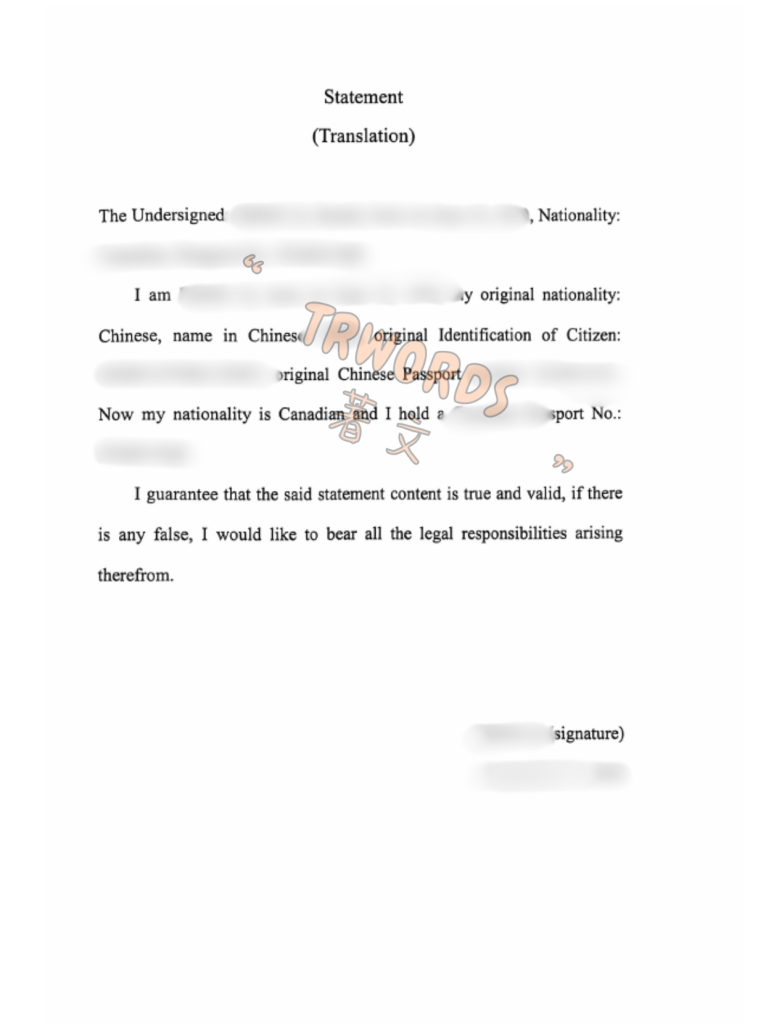
The applicant can sign a same-person declaration before a local notary or other authorized official in the country of current citizenship. The declaration normally lists the former Chinese name, Chinese ID or passport details, current foreign name and current passport information.
After notarization, the document may need an Apostille before it is used in China.
The declaration and Apostille will usually need to be translated into Chinese for submission to the Chinese receiving authority.
Sign a Declaration at the Current Country’s Embassy or Consulate in China
A person who is already in China may be able to sign a same-person declaration before the embassy or consulate of their current country of citizenship. The diplomatic mission may notarize or certify the declaration according to the services it provides.
The embassy-certified declaration can then be used to apply for a notarized Chinese translation in China. This creates a Chinese notarial certificate confirming that the Chinese translation is consistent with the foreign-language declaration.
Availability, appointments and required supporting documents vary by embassy or consulate. The applicant should confirm the procedure directly with the relevant diplomatic mission before preparing the declaration.
Apply for a Same-Person Declaration Notarization in China
A former Chinese citizen may also apply directly to a Chinese notary office for notarization of a same-person declaration. The declaration identifies the former Chinese identity and the current foreign identity and states that both refer to the applicant.
The notary office will usually review the current foreign passport, former Chinese documents, naturalization records and other evidence connecting the two identities. Additional materials may be required when names, dates or document details do not match exactly.
This route may be convenient when the person is already in China and has enough supporting records. Whether the matter can be handled remotely depends on the notary office and the documents available.
What Should a Same-Person Declaration Include?
A clear declaration will normally include:
- the applicant’s current foreign name;
- current nationality and passport number;
- former Chinese name;
- former Chinese ID number;
- former Chinese passport number, if available;
- date and place of birth;
- date or basic details of naturalization;
- a statement confirming that all listed identities refer to the same person.
Translation and Notarization in China
Foreign-issued declarations, naturalization certificates and name change documents may need Chinese translations before they can be used by a property office, bank, court, notary office or other authority in China. The receiving authority may request a stamped translation or a notarized translation, depending on the procedure.
We can assist with notarized Chinese translations of foreign documents and same-person declaration notarization in China. This may include reviewing the identity document chain, preparing the Chinese translation and coordinating the Chinese notarial process.
The final format should be confirmed with the authority handling the property, inheritance, bank account, citizenship application or other matter. Once the requirement is clear, the documents can be prepared through the most suitable of the three routes.
Prepare the Identity Chain Early
Identity problems are easier to solve when old documents are still available. Former Chinese passports, ID cards and household records may appear outdated, but they can be the most useful evidence connecting a current foreign passport to earlier Chinese records.
Before starting a property transaction, inheritance case or new citizenship application, check the names and identification numbers on all relevant documents. Preparing the identity link early can prevent delays when the receiving authority asks who the person in the old record actually is.