
A Moroccan student completed her bachelor’s degree in China and later returned to Morocco. When she planned to continue her studies in Italy, she needed to prepare several Chinese academic documents, including her transcript, graduation certificate and degree certificate.
This situation is common for international students who studied in China and later apply to universities or academic programs in Italy. Their nationality may be Moroccan, Thai, Korean, American or otherwise, but if the academic documents were issued by a Chinese school or university, the document preparation route often starts from China.
This guide explains how Chinese academic documents may be prepared for study in Italy. It focuses on notarization, translation, Apostille, Declaration of Value and CIMEA, rather than admission strategy or university selection.
Who Is This Guide For?
This guide is for international students who have completed part of their education in China and now need to use Chinese academic documents for study in Italy. It may apply to students who finished high school, bachelor’s degree, master’s degree or other formal studies in China.
It is also useful for students who have already left China. In many cases, document preparation can start with clear scanned copies, and the final notarized and apostilled documents can be shipped abroad by courier.
The exact document list still depends on the Italian university, degree level, visa office, consular procedure or evaluation requirement. Students should always check the latest instructions from the receiving institution before starting notarization or Apostille.
Why Chinese Academic Documents May Need Special Preparation
Chinese academic documents are issued under China’s education and document system. An Italian university or authority may need a format that makes the document easier to read, verify and accept for academic procedures.
This is why students may be asked to prepare notarized copies, certified translations, Apostille, Declaration of Value or CIMEA-related documents. These steps help connect the Chinese document with the Italian academic review process.
The key point is simple: if the school record, transcript, graduation certificate or degree certificate was issued in China, the document usually needs to be prepared through the Chinese document route before it can be submitted for use in Italy.
Common Chinese Academic Documents for Italy Study Applications
The required academic documents may differ depending on whether the student is applying for a bachelor’s degree or a master’s degree. Separating the two situations can help students avoid preparing the wrong set of documents.
For Bachelor’s Degree Applications
Applicants for bachelor’s degree programs may need documents related to their secondary education in China. These may include a high school graduation certificate, high school academic transcript and, where required, college entrance examination results or other academic records used to assess access to higher education.
Some universities or procedures may request additional school records, depending on the applicant’s background and the program type. Applicants for art, music, design or similar programs may also need to prepare portfolios or subject-specific materials.
For Master’s Degree Applications
Applicants for master’s degree programs usually need documents related to their university education in China. The most common documents include a graduation certificate, degree certificate and academic transcript.
Some Italian universities may also request a course description or syllabus. This can be important when the university needs to review the academic content of the applicant’s previous studies and compare it with the target program in Italy.
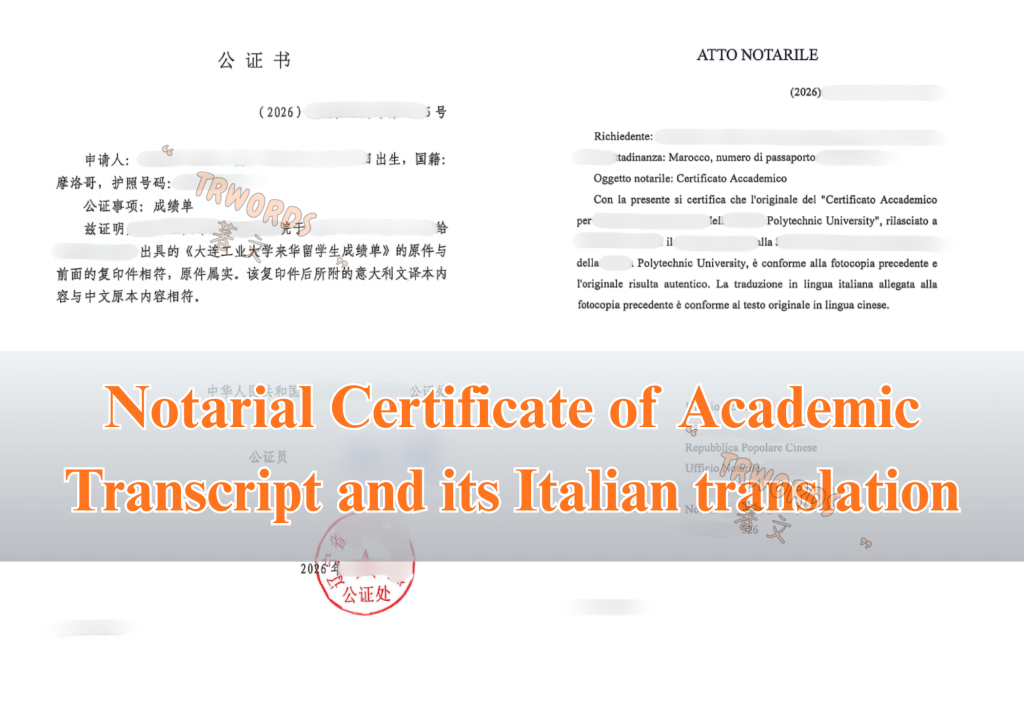
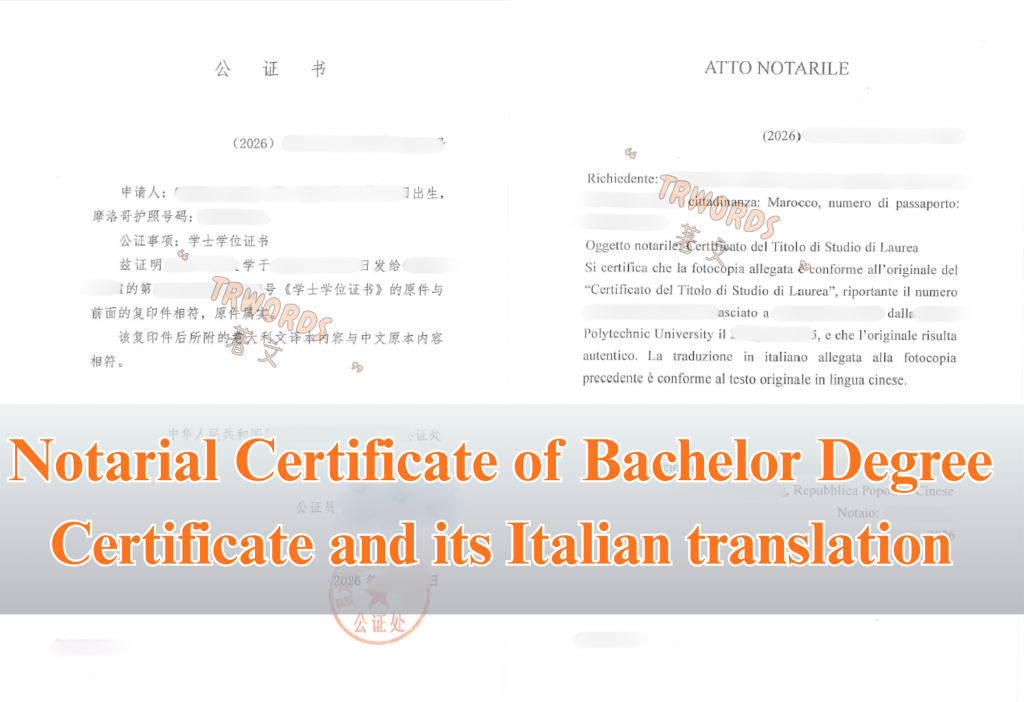
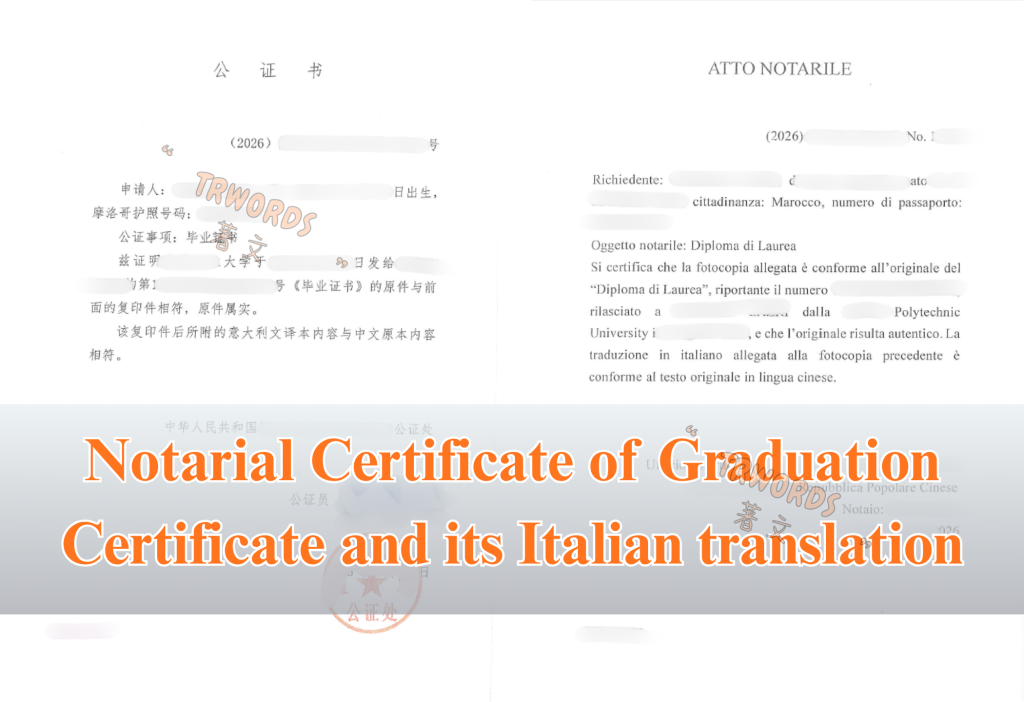
Notarization and Translation in China
For Chinese academic documents used in Italy, the notarial certificate should generally be prepared in Chinese and Italian. This is especially important when the documents are used for Italian consular procedures, Declaration of Value, university enrollment, visa-related steps or other formal academic procedures in Italy.
In practice, the notarial certificate should not only translate the academic document into Italian, but also include wording confirming that the attached Italian translation is in conformity with the Chinese original. For example, this may appear as a notarial statement that the Italian translation attached to the certificate is consistent with the original Chinese document.
The exact structure may vary depending on the notary office and the type of notarization. Some notarial certificates can include the translation conformity wording within the main notarial text, while others may be prepared with an additional translation conformity notarial certificate. The key point is that the Italian translation and the “translation in conformity with the original” wording should be properly handled before the document is apostilled.
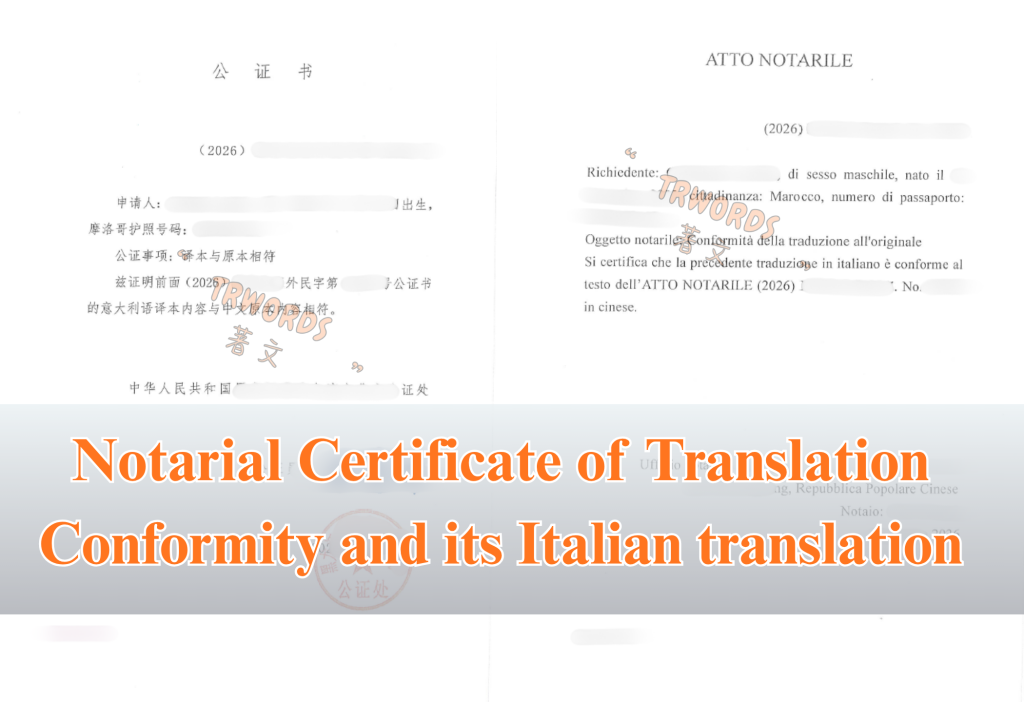
China Apostille for Use in Italy
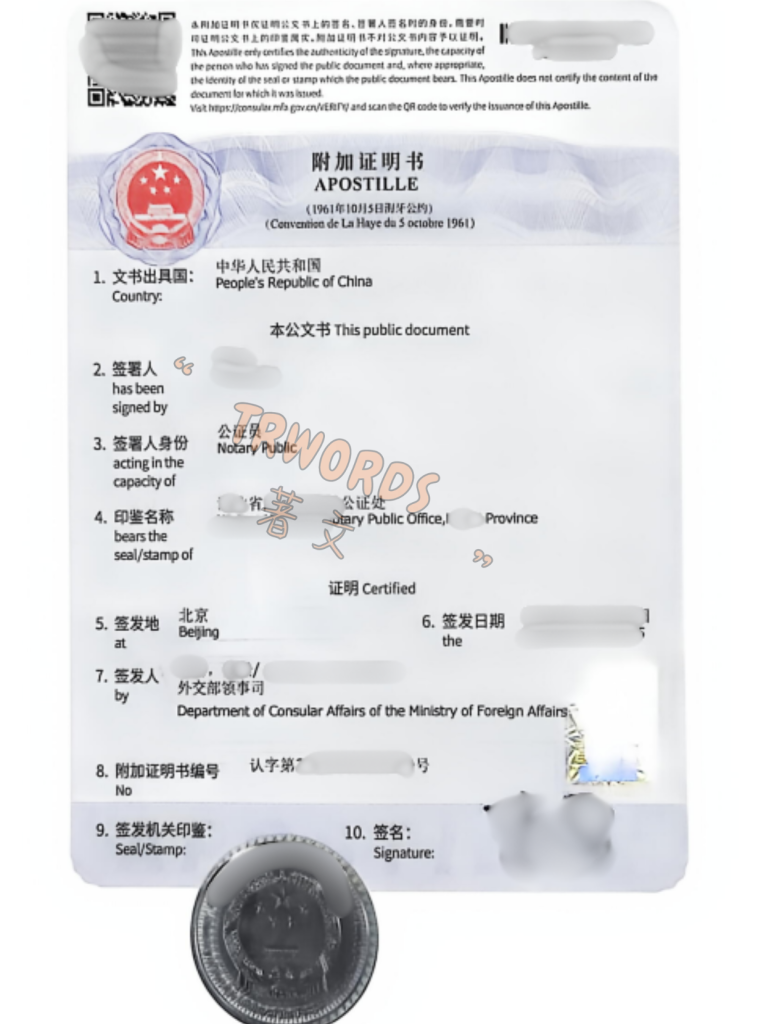
After notarization, Chinese academic documents may need China Apostille before they are used in Italy. Since China and Italy both apply the Apostille system, Chinese public documents intended for use in Italy generally go through Apostille rather than consular legalization.
For academic documents, the Apostille is usually attached to the Chinese notarial certificate. It confirms the official signature, seal or capacity on the public document so that the document can circulate for use abroad.
Students should prepare enough time for this step. Notarization and Apostille are separate procedures, and the final timeline may also depend on the notary office, foreign affairs office, public holidays and courier delivery.
Declaration of Value or CIMEA: Which One Do You Need?
Declaration of Value, often called Dichiarazione di Valore, is a document issued through the Italian consular system. It describes a foreign qualification and helps Italian institutions understand the value of that qualification in the education system where it was awarded.
CIMEA is a separate route that may provide Statements of Comparability and Verification for foreign qualifications. CIMEA itself advises applicants to check directly with the Italian higher education institution to confirm whether these certificates are needed.
The important point is that students should not choose only based on someone else’s experience. Some Italian universities may ask for CIMEA, some may ask for a Declaration of Value, and some may give their own document instructions.
Can the Process Be Handled After Leaving China?
Yes, in many cases the process can still be handled after the student has left China. For example, a Moroccan student who completed a bachelor’s degree in China may already be back in Morocco when the Italian application requires Chinese academic documents.
The first step is usually to collect clear scans of the graduation certificate, degree certificate, transcript and any written requirement from the Italian university or receiving authority. Based on the requirement, the documents can then be prepared for notarization, translation and Apostille in China.
After completion, the final documents can be shipped by DHL to Morocco, Italy or another address requested by the student. Courier time should be counted separately from the document processing time.
Practical Tips Before You Start
Students should also confirm the required document format before notarization. For Chinese academic documents used in Italy, Chinese-Italian bilingual notarization is usually the standard route, and the notarial certificate should include wording confirming that the Italian translation is in conformity with the Chinese original. If the student already has an English transcript or English degree document issued by the university, it can be useful for reference, but it does not replace the Italian-format notarized document when that format is required.
How We Can Help
We assist international students with Chinese academic document preparation for study in Italy. Common documents include graduation certificates, degree certificates, academic transcripts, course descriptions and other school-issued documents.
Our service can include Chinese notarization, translation, China Apostille and international courier delivery. If the student has already left China, the process can often begin with scanned copies for review.
We do not decide admission eligibility or the final document checklist for Italian universities. Students should confirm the required format with the university, consular office, CIMEA or other receiving authority, and we can help prepare the Chinese documents according to the confirmed requirement.