
If you have ever tried to use a Chinese document overseas, you may have met the old paperwork monster: notarization, foreign affairs authentication, embassy legalization, photocopies, stamps, more stamps, and at least one moment where you wonder whether the document is applying for a visa instead of you.
Good news: China’s Apostille system has made things much easier for many cross-border documents. Since the Apostille Convention entered into force for China on November 7, 2023, Chinese public documents for use in other Apostille Convention countries can usually be processed with an Apostille instead of the old multi-step consular legalization route.
This guide explains what Apostille in China means, when you need it, what documents can be apostilled, and how the process works. No legal fog machine. No mysterious stamp worship. Just the essentials.
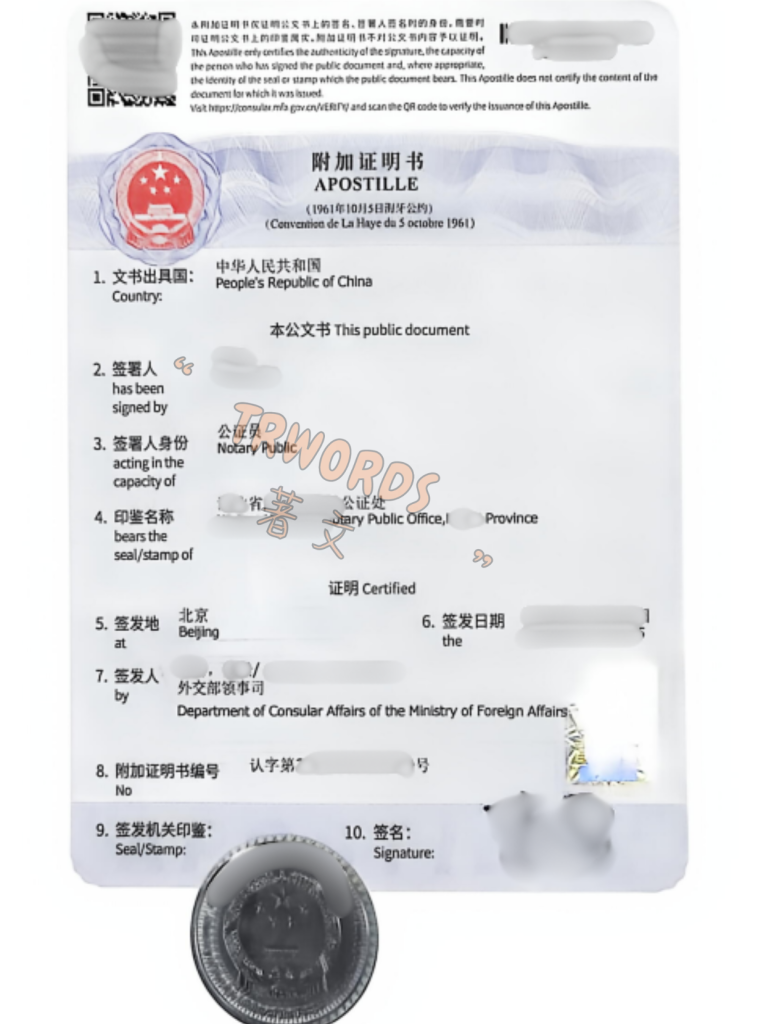
What Is an Apostille in China?
An Apostille is an official certificate attached to a public document so that the document can be accepted in another country that is also part of the Apostille Convention.
In China, the official Chinese term is 附加证明书, and the English term is Apostille. It is issued by China’s Ministry of Foreign Affairs or authorized local Foreign Affairs Offices.
Here is the important part: an Apostille does not re-check your whole life story. It does not decide whether your birth certificate is emotionally moving, whether your diploma was hard-earned, or whether your power of attorney has good handwriting.
Its job is more specific. It confirms the signature, seal, or official capacity on the public document so that foreign authorities can recognize it.
Think of Apostille as your document’s international name tag. Without it, your document arrives overseas and says, “Trust me.” With it, your document arrives and says, “I have been officially checked. Please stop giving my owner more paperwork.”
Apostille vs. Consular Legalization
Before China joined the Apostille system, many Chinese documents used abroad had to go through consular legalization. This usually meant notarization in China, authentication by the Chinese foreign affairs authority, and then legalization by the embassy or consulate of the destination country.
That process still exists for countries that do not use the Apostille system with China. But for Apostille Convention countries, the route is usually much simpler.
For most Chinese documents used in an Apostille country, the process is now:
Notarization in China → Apostille in China → Use abroad
For non-Apostille countries, the route may still be:
Notarization in China → Chinese foreign affairs authentication → Foreign embassy or consulate legalization
The difference is simple: Apostille usually keeps the process inside China’s certification system. Consular legalization adds the destination country’s embassy or consulate into the process. That extra step can mean more time, more cost, and more chances for your document to enjoy a long vacation on someone’s desk.
Do You Need Apostille or Consular Legalization?
The first question is always: Where will the document be used?
If the document will be used in an Apostille Convention country, China Apostille is usually the correct route. This includes many common destinations for study, work, immigration, marriage, company registration, and family matters.
If the document will be used in a country that does not accept Apostille documents from China, consular legalization may still be required.
Do not guess this part. Guessing is fine for restaurant menus, not for cross-border documents. Before starting, check whether the destination country accepts Apostille and whether the receiving authority has any special format requirements.
Common Chinese Documents That May Need Apostille
Many personal and business documents issued or notarized in China may need Apostille before they are used abroad.
Common personal documents include:
- birth certificates or birth notarization;
- kinship or family relationship notarization;
- no criminal record notarization;
- marriage certificates;
- divorce certificates or divorce agreements;
- passports, ID documents or household register documents;
- graduation certificates, degree certificates and transcripts;
- driving licenses and bank statements.
Common business documents include:
- business licenses;
- articles of association;
- certificates of good standing or company status documents;
- board resolutions;
- powers of attorney;
- trademark or patent certificates;
- bank reference letters;
- contracts, invoices and certificates of origin.
The exact document route depends on the document type. Some documents need to be notarized first. Some commercial documents may go through a trade-related certification route. Some receiving authorities may ask for a specific wording, language, number of copies, or translation format.
Can You Apostille a Photocopy Directly?
Usually, no. This is one of the most common misunderstandings.
Many people think they can take a photocopy, wave it politely at the Apostille office, and receive a shiny certificate. Sadly, paperwork does not work like a vending machine.
In most cases, the document first needs to be turned into a proper Chinese public document, usually through notarization. For example, if you need to use a Chinese diploma overseas, you may first need a notarial certificate for the diploma. Then the Apostille is attached to that notarial certificate.
So the practical route is often:
Original document or supporting materials → Notarial certificate → Apostille
The Apostille is usually not attached to a random photocopy. It is attached to a document that the competent authority can certify.
The Standard Apostille Process in China
The process is usually straightforward, but the details matter.
First, confirm the destination country and the receiving authority’s requirements. This includes the document type, language, number of copies, whether notarization is needed, and whether the receiving party wants any specific format.
Second, prepare the document for notarization or certification in China. For personal documents, this often means working with a Chinese notary office. For business documents, the route may depend on the document and use purpose.
Third, after the notarial certificate or public document is ready, submit it for Apostille through China’s Ministry of Foreign Affairs or an authorized local Foreign Affairs Office.
Fourth, once the Apostille is issued, the document can be sent abroad by courier or submitted to the receiving authority.
For many cases, ordinary Apostille processing takes around 5 working days after the notarized document is ready.
Does Apostille Have an Expiry Date?
The Apostille itself usually does not have a fixed expiry date. It confirms the signature, seal, or official capacity on the document at the time of certification.
However, the document behind the Apostille may have a practical validity period. A no criminal record document, single status certificate, medical certificate, or financial document may be accepted only if it was issued recently.
This is where people get trapped. The Apostille may still be fine, but the receiving authority may say, “Nice stamp, but the underlying document is too old.”
For documents such as police clearance, unmarried status, bank statements, or health documents, always confirm the timing requirement with the receiving authority before you start.
Can China Apostille Be Verified Online?
Yes. China provides an online verification system for consular authentication and Apostille certificates. This allows foreign authorities, schools, companies, immigration offices, and other receiving parties to check the authenticity of the Apostille.
This is useful because the receiving party does not need to simply stare at a seal and hope for the best. They can verify the certificate through the official system.
Do You Still Need Embassy Legalization After Apostille?
For documents moving between Apostille Convention countries, Apostille normally replaces embassy or consulate legalization.
That is the whole point of the system. Apostille is designed to reduce the old chain of repeated authentication. Once a Chinese document has been properly notarized and apostilled for use in an Apostille country, additional embassy legalization is usually not required.
If the destination country is not part of the Apostille system with China, then consular legalization may still be needed.
Translation: Usually Completed at the Notarization Stage
For Chinese documents intended for use overseas, translation is usually completed during the notarization process. The notarial certificate is generally issued in both Chinese and a foreign language, such as English, Spanish, French, Italian, German, Portuguese, Korean, or Japanese.
The bilingual notarial certificate is then submitted for an Apostille. The Apostille authenticates the signature and seal on the notarial certificate, while the translated content allows the receiving authority to understand the document.
Before applying, confirm which language the receiving authority accepts. Choosing the wrong translation language or notarial format may still lead to rejection, even if the Apostille itself has been issued correctly.
Birth Certificates and Photos: Yes, Even This Can Become Complicated
Some countries or offices may ask for a photo on a birth notarial certificate. Others may not care. Some local Foreign Affairs Offices in China may also have their own handling practice for certain document types.
This is why birth documents, police clearance documents, academic documents, and marriage documents should be reviewed before notarization. A small format issue at the beginning can become a large headache after the Apostille is already attached.
Paperwork has a talent for becoming dramatic at the worst possible time.
How Much Does Apostille in China Cost?
The total cost depends on the document type and service route. In general, the cost may include:
- notary fee;
- translation fee, if needed;
- Apostille official fee;
- service fee, if you use an agent;
- courier fee, if the document needs to be shipped.
Before starting, it is important to confirm the document type, destination country, language, number of copies, and whether the receiving authority requires any special wording. These details affect the final cost and timeline.
Can You Handle China Apostille Remotely?
In many cases, yes. This is especially helpful for foreigners who used to live, study, work, marry, or do business in China but are now outside China.
Depending on the document type, the process may begin with clear scanned copies. Some documents can be reviewed remotely, and the completed notarized and apostilled documents can be sent abroad by DHL or another courier.
However, not every document can be handled in exactly the same way. Some notary offices may require original documents, school or employer verification, police record checks, or additional supporting materials.
The best approach is to review the document first, confirm the destination country and use purpose, and then choose the correct route.
Apostille in China: Quick Checklist
Before you start, check these points:
- Which country will receive the document?
- Is that country an Apostille Convention country for China?
- What exact document does the receiving authority want?
- Does the document need notarization first?
- What language should the document be in?
- Does the receiving authority require a specific format, wording, or number of copies?
- Is there a deadline or validity period?
- Will you need international courier delivery?
If you can answer these questions, you are already ahead of many applicants. Congratulations. Your paperwork survival rate has improved.
How We Can Help
We assist foreigners with the China Apostille for personal and business documents. This may include document review, translation, notarization coordination, Apostille handling, and international courier delivery.
Common documents include police clearance documents, birth certificates, marriage certificates, divorce certificates, academic documents, powers of attorney, company documents, business licenses, contracts, invoices and certificates of origin.
We do not decide what a foreign authority will accept. The receiving school, immigration office, court, government agency, bank, employer, or business partner has the final say. Once you confirm the required format, we can help prepare the Chinese document for Apostille accordingly.
Final Word
Apostille in China is a major improvement for people who need to use Chinese documents abroad. It has replaced a lot of the old consular legalization process for Apostille Convention countries and made cross-border paperwork less exhausting.
It does not remove every requirement. You may still need notarization, translation, correct formatting, and careful timing. But compared with the old system, it is a much friendlier route.
In short: get the document right, get it notarized if needed, get the Apostille, and let your paperwork travel with fewer stamps and less drama.