
Whether you need a CGC depends on the requirements of the receiving authority. For foreign nationals, eligibility requirements also apply, so a short visit to Malaysia does not automatically mean that you can apply for the certificate.
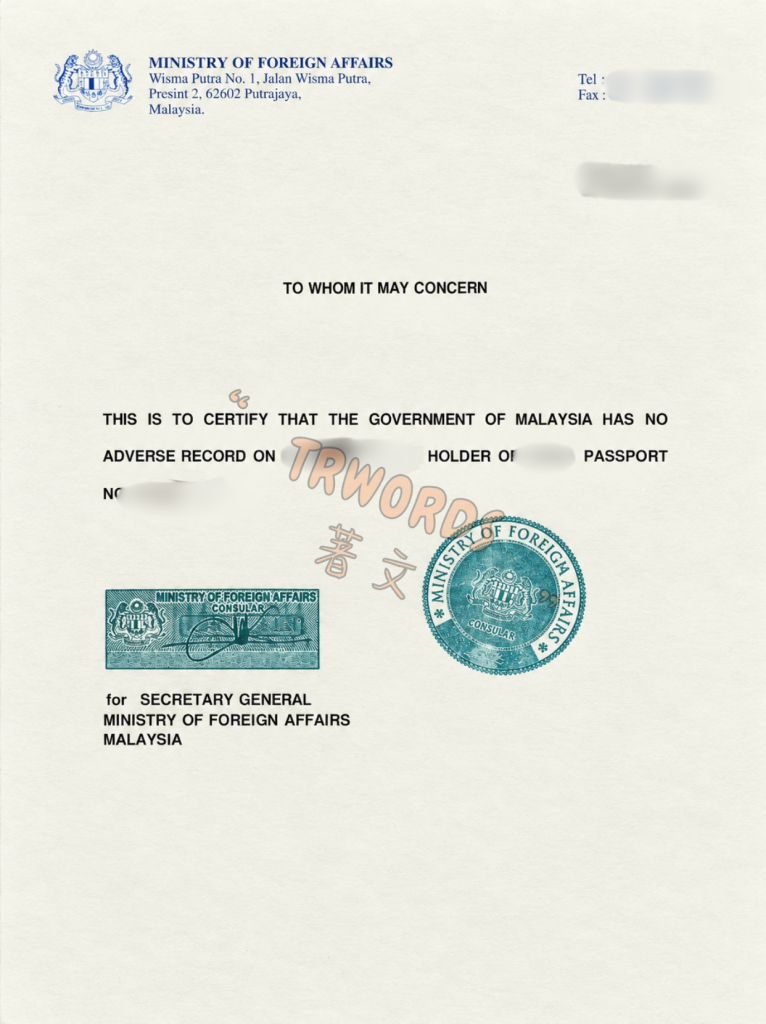
Who May Need a Malaysian CGC?
Common situations include:
- Malaysian citizens applying to work, study or reside overseas;
- Foreign nationals who previously studied or worked in Malaysia and are now applying for opportunities abroad;
- Former Malaysian residents applying for a visa, residence permit or immigration status in another country;
- Applicants who have already left Malaysia and need a Malaysian police clearance for another official procedure.
If you have already left Malaysia, you can still apply online and arrange assistance with the application, translation, authentication and document delivery where required.
How to Apply Online
Applications are submitted through the Malaysian Ministry of Foreign Affairs e-Konsular system:
https://ekonsular.kln.gov.my/login
The general process is:
- Register for or log in to your personal account;
- Enter your personal details, relevant education or employment history and the purpose of the application;
- Upload the required documents and submit the application;
- Check the application status and provide additional information if requested;
- Once approved, follow the system instructions for payment and downloading or collecting the certificate.
What Documents Do You Need?
The required documents can vary depending on your circumstances. For an initial application review, you may need:
- Malaysian Identity Card, front and back, where applicable;
- Valid passport information page;
- Passport-size photograph with a white background;
- Email address and telephone number;
- Education information, including the school name and enrolment/graduation years, if applicable;
- Employment history, including company names and positions, if applicable;
- Evidence of the purpose of the application, such as an employment offer, admission letter or a request from the relevant authority;
- For non-Malaysian applicants, documents showing your period of residence in Malaysia, such as passports, visas, work permits, student passes or other long-term residence documents.
Validity Period
The validity period depends on the requirements of the receiving authority. For example, when a Malaysian CGC is submitted as part of an application for a foreigner’s work permit in China, the certificate may need to have been issued within the previous six months.
Does the CGC Need Authentication or Legalization?
Because Malaysia is not a party to the Hague Apostille Convention, a Malaysian Certificate of Good Conduct cannot be issued with an Apostille, even when you intend to use it in a country that is a member of the Convention.
If the receiving authority requires the CGC to be authenticated, the document will generally need to follow the authentication or consular legalization procedure required for documents issued in Malaysia. The exact procedure depends on the destination country and its requirements, and may involve Malaysian authority authentication followed by authentication at the destination country’s embassy or consulate.
Translation may also be required depending on the language requirements of the receiving authority.