
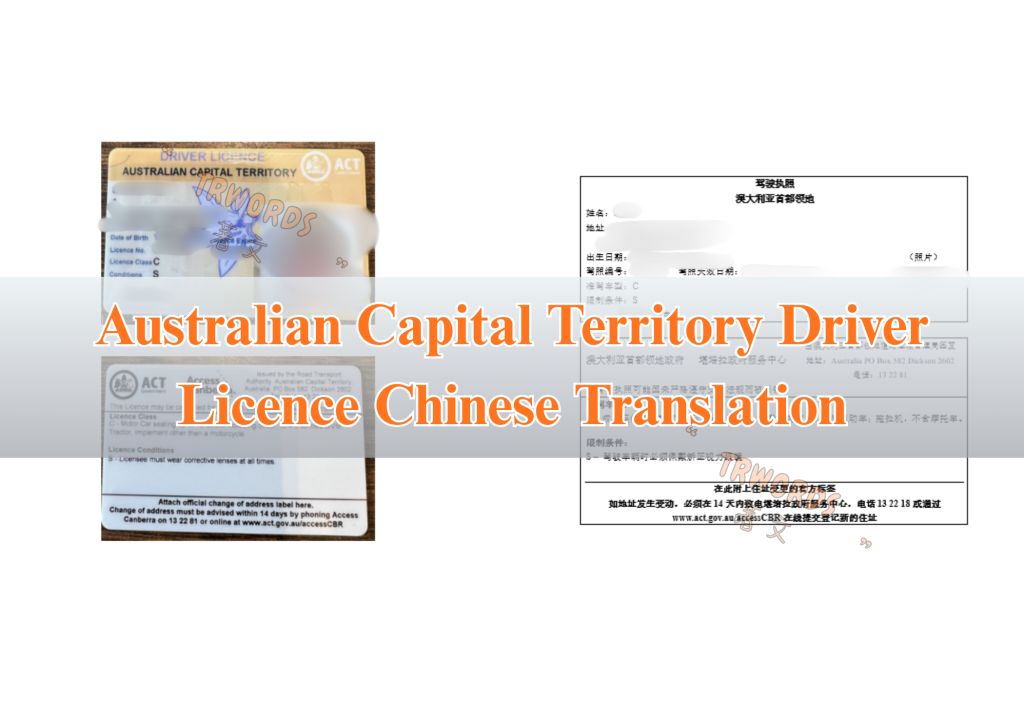
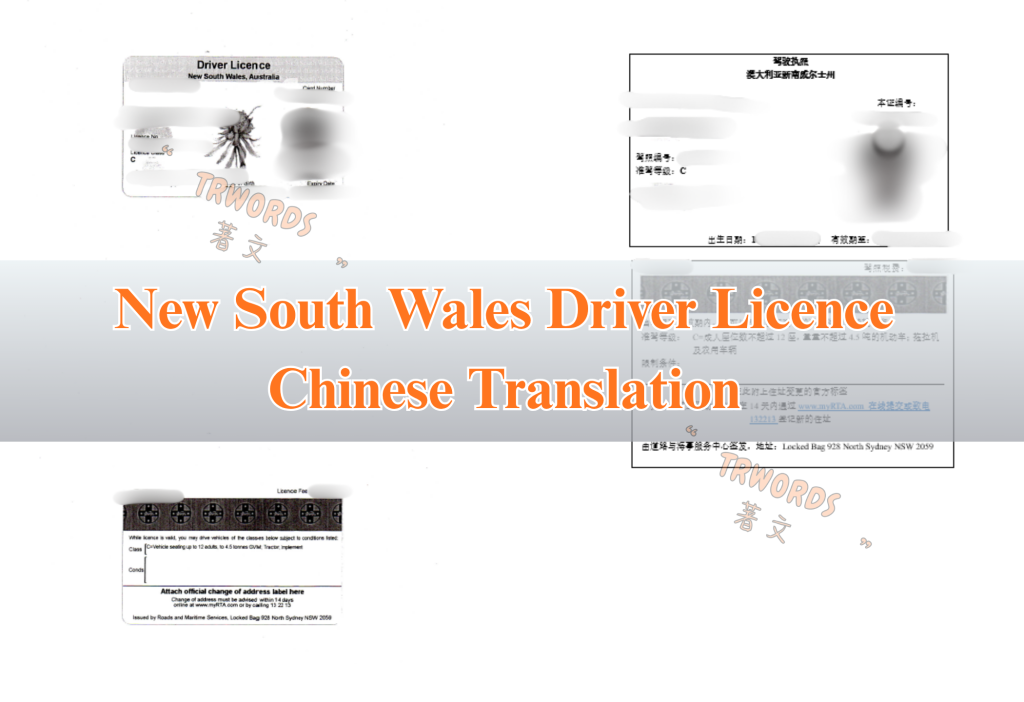
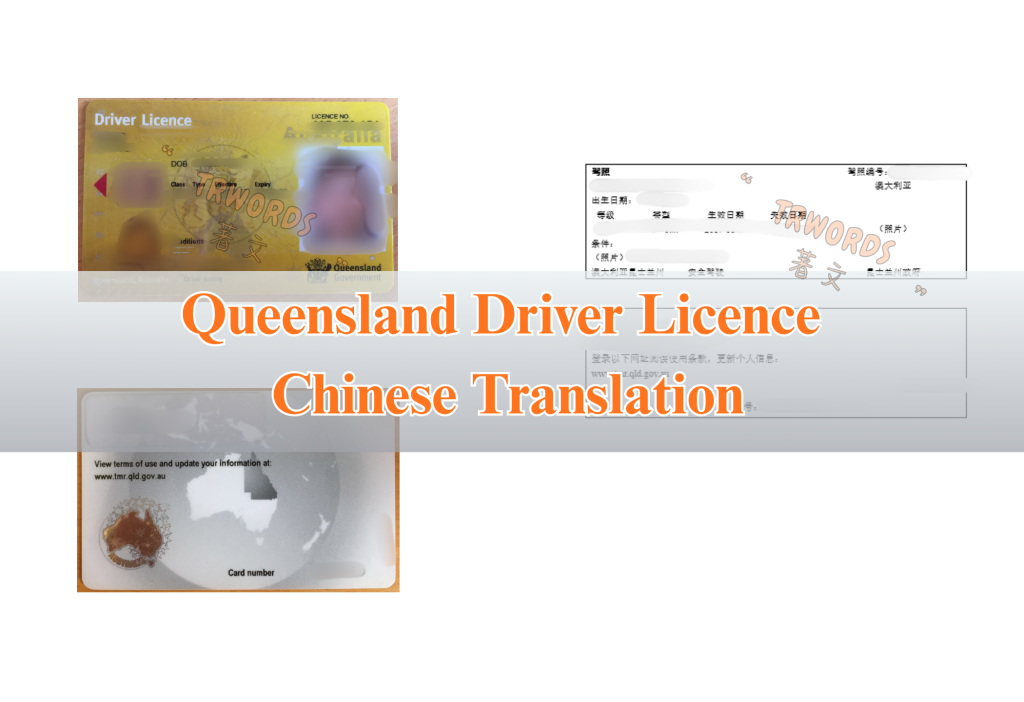
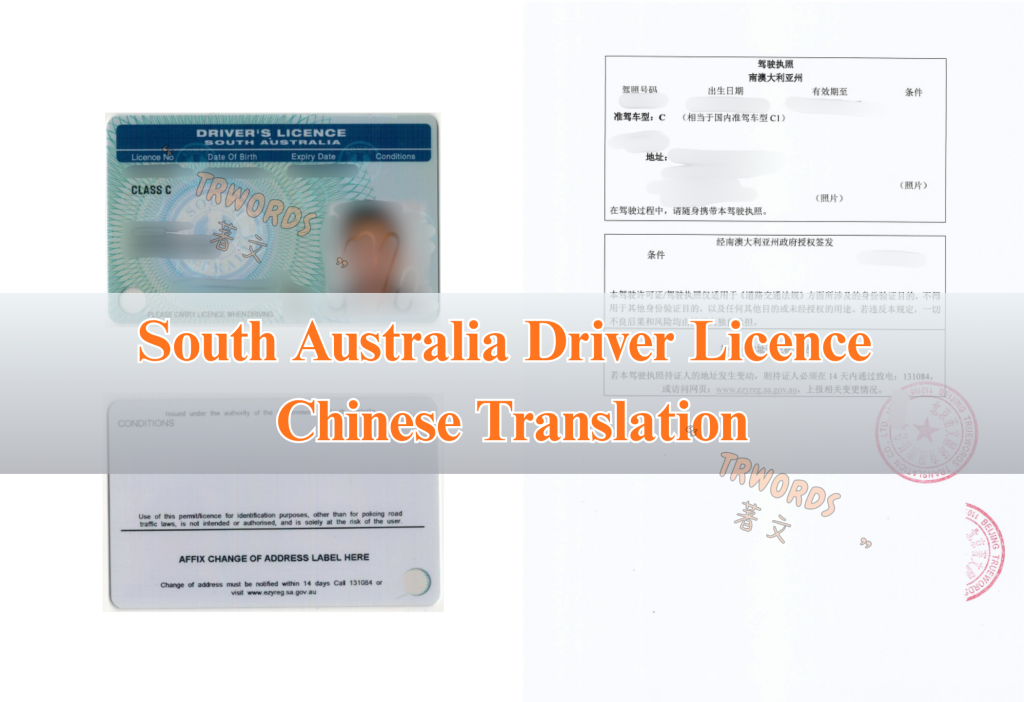
We have translated Australian driver licences issued in New South Wales, Victoria, Queensland, South Australia, Tasmania and the Australian Capital Territory for clients applying to drive in China.
One thing quickly becomes clear: there is no single Australian licence template. The basic information is similar, but the layout, licence classes, conditions and restrictions can look quite different from one state or territory to another. That matters when the translation is being prepared for a Chinese vehicle administration office.
Already Have a NAATI Translation? You May Not Need One
For Australians, the words “certified translation” often bring NAATI to mind. NAATI is Australia’s national standards and certifying authority for translators and interpreters, and its Certified Translator credential applies to the individual translator.
China handles driver licence translations differently. For example, Beijing’s current rules require a non-Chinese foreign driver licence to be accompanied by a Chinese translation issued by a translation agency or notarised by a notary office.
For that reason, we generally suggest waiting until you know the requirements in China before arranging a translation in Australia. A NAATI translation may be perfectly accurate, but the Chinese vehicle administration office may still require a translation prepared in the format it accepts locally.
If you are moving or travelling to China, there is usually little benefit in paying for the same translation twice.
Australian Licence Classes and China’s C1 and C2 Categories
Australia and China use different driver licence classification systems, so the codes do not correspond directly.
In China, C1 covers both manual and automatic small cars, while C2 is limited to automatic small cars.
This becomes important when we prepare an Australian licence translation. For example, Beijing requires the corresponding Chinese category to be shown in the translation, so before we start, we ask the client whether they intend to drive manual and automatic small cars in China and check the conditions shown on the Australian licence.
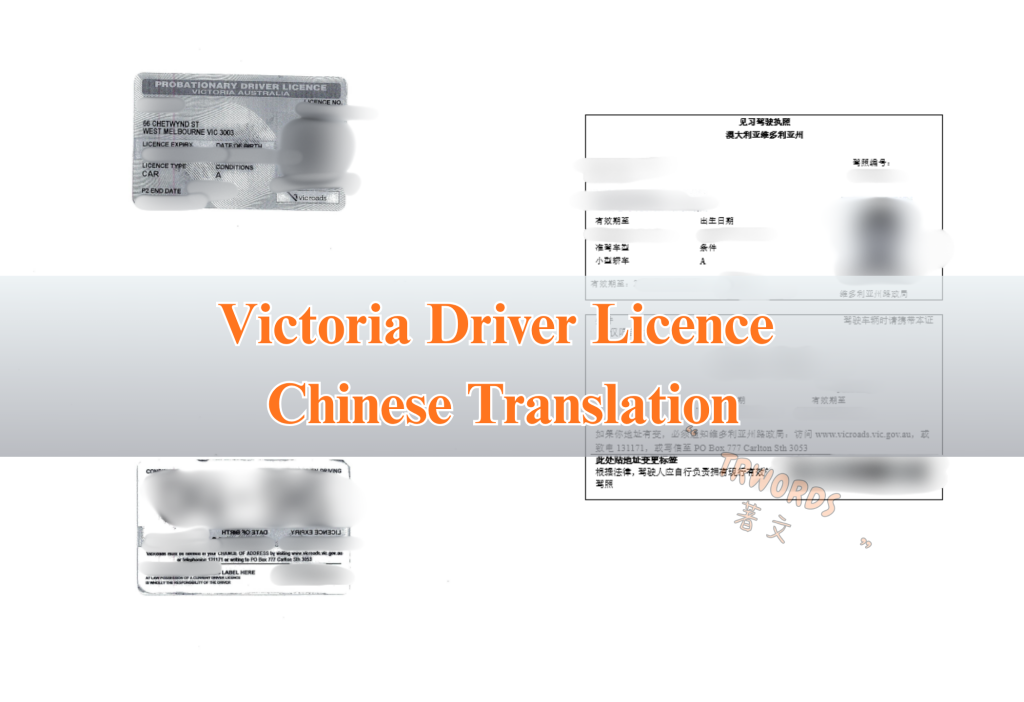
A Victorian licence, for example, may include Condition A, restricting the holder to automatic vehicles. Other Australian licences may contain conditions relating to eyesight, vehicle type or other driving restrictions. These details need to be carried across into the Chinese translation.
Requirements outside Beijing can differ. If your local vehicle administration office asks for a particular category notation or wording, we can revise and reissue the translation to match its requirements.
The Licence Class Is Only Part of the Story
When translating an Australian licence, we do not just look at the name, licence number and expiry date.
Depending on the state or territory, the licence may also contain:
- licence class and vehicle entitlement;
- conditions or restriction codes;
- corrective-lens requirements;
- automatic-transmission restrictions;
- issuing authority details;
- separate information on the reverse of the card;
- additional endorsements or heavy-vehicle information.
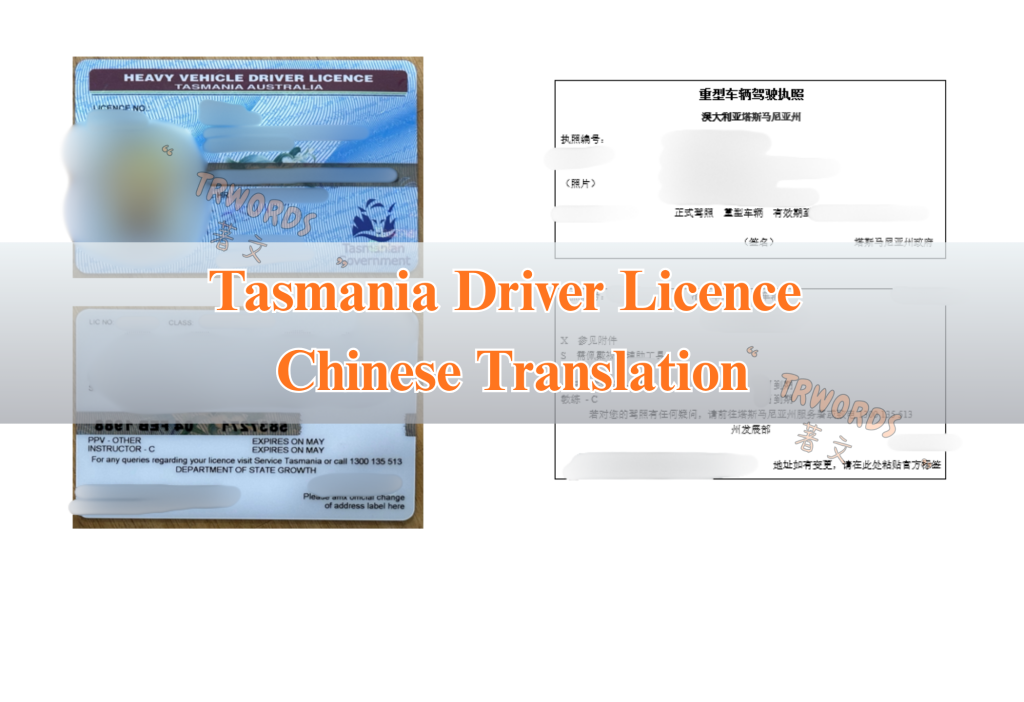
For example, licences we have handled from Victoria, the ACT and Tasmania present conditions and vehicle information in noticeably different ways. A generic template should therefore be checked against the actual card rather than reused without reviewing the original.
Choose a Chinese Name Before the Translation Is Prepared
Another detail many Australian applicants do not think about until they arrive in China is their Chinese name.
In our driver licence cases, foreign applicants are commonly required to use a Chinese-character name in the vehicle administration system. If you do not already have one, it is worth deciding on a Chinese name before the translation is prepared.
If you already use a Chinese name on a residence permit, employment record, university document or another official record in China, send us that version. Keeping the same Chinese name across your driver licence translation and other Chinese records helps avoid unnecessary inconsistencies later.
Full Chinese Licence or Temporary Driving Permit?
The same Australian licence translation may be required for two different purposes.
If you are living in China and want a full Chinese driver licence, you can apply on the basis of a valid foreign licence. A non-Chinese licence requires a Chinese translation, and ordinary foreign licence holders generally need to complete the relevant Chinese driving test requirements.
If you are only visiting China, a temporary driving permit may be more practical. Chinese rules also require a Chinese translation of a foreign-language licence for this procedure, and rented cars are generally limited to the C1 or C2 categories permitted by the temporary licence.
What Should You Send Us?
For an Australian driver licence translation, we usually need clear colour scans or photos of both the front and back of the licence. All edges, conditions, classes, codes and remarks should be visible.
It is also helpful to tell us:
- the city in China where you will apply;
- whether you intend to apply for C1 or C2;
- your Chinese name.
We then prepare the translation based on the actual Australian licence and the intended Chinese application. If the local vehicle administration office later asks for different wording or formatting, the translation can be adjusted accordingly.