
In China, disputes often arise when a tenant moves out and the property is handed back to the landlord. Common disagreements include damage to the property, missing items, cleaning costs, repair expenses, and the return of the security deposit.
Many people instinctively take large numbers of photos and videos on their phones, assuming that these records will automatically be accepted as evidence in court. In practice, privately recorded materials may be challenged, especially when the other party questions when, where, or how they were created.
In such cases, evidence preservation notarization may provide stronger and more reliable proof of the property’s condition.
Why Personal Photos and Videos May Be Challenged
Photos and videos taken by a landlord or tenant can still be submitted as evidence. However, the opposing party may argue that:
* the images were edited or altered;
* the date and location cannot be verified;
* only selected areas were filmed;
* the property had already been changed before recording;
* the personal filming did not accurately represent the actual condition.
With modern editing technology, proving the authenticity and completeness of privately recorded material can become difficult. The person submitting the evidence may then need to provide additional information to establish its reliability, such as a notarial certificate of evidence preservation.
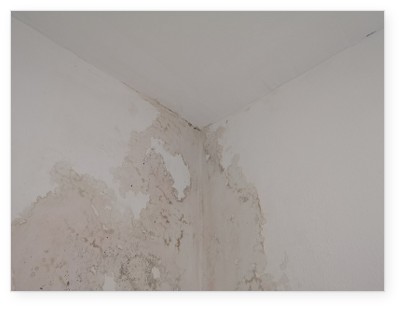
What Is Evidence Preservation Notarization of a Property’s Condition?
This procedure allows a notary to attend the property and formally document its condition before any repairs, renovation, cleaning, removal of items, or re-letting takes place.
The notary may record the layout of the property, damaged areas, fixtures, furniture, appliances, meter readings, keys, and other relevant details through photographs, video recordings, or written notes.
The resulting records are organized and attached to a notarial certificate. This creates a formal record of what the property looked like at a particular time.
Once the evidence preservation notarization is completed, the owner may generally proceed with necessary repairs, renovation, or re-letting without losing the original evidence of the property’s condition.
True Cases
Case 1
Ms. Zhang rented out an apartment and later became involved in a dispute with the tenant after the tenancy ended.
The parties could not reach an agreement, and Ms. Zhang eventually brought the matter to court. At the same time, she needed to repair and renovate the apartment so that it could be rented out again.
She was concerned that once the renovation began, the original condition of the apartment would no longer be visible. This could make it difficult to prove the extent of the damage later.
Before carrying out any work, she applied to a notary office for notarizing preservation of evidence. Notaries attended the property and formally recorded its condition. She was then able to proceed with the renovation while retaining documented evidence for the dispute.
Case 2
Mr. David, an expatriate working in China, rented an apartment for two years and planned to move out recently. But the landlord claimed that parts of the apartment had been seriously damaged and refused to return the security deposit. The landlord also demanded additional compensation for repairs.
David was concerned that once he handed over the keys, the apartment could be cleaned, repaired, or altered before any dispute was resolved. To preserve evidence of the property’s actual condition at the time of move-out, he applied to a notary office for evidence preservation notarization.
Notaries attended the apartment before the handover was completed and documented the condition of the property through photographs and video recordings. The preserved evidence after notarization later became an important reference during negotiations and in resolving the dispute.
Documents Commonly Required
The exact requirements for evidence preservation notarization vary depending on the notary office and the circumstances of the case. Commonly requested documents include:
* the applicant’s passport or identity document;
* the property ownership certificate or other proof of the right to use or manage the property;
* the tenancy agreement;
* documents relating to the dispute, such as handover records, inventories, payment records, repair quotations, messages, or notices;
* authorization documents, where an agent applies on behalf of the landlord, tenant, or company.
Additional materials may be requested after the notary reviews the case.
How the Procedure Usually Works
The applicant first submits an application for evidence preservation notarization and supporting documents to the notary office.
After the application is accepted and the relevant fees are paid, the notaries or other authorized personnel attend the property. The applicant may be asked to identify the rooms, items, damaged areas, or other facts that need to be recorded.
The property is then documented through photographs, video, written descriptions, inventories, or other appropriate methods.
The recorded materials may be printed, stored on a disc or another storage medium, sealed in an evidence bag, stamped, and referenced in the notarial certificate.
Once the evidence preservation notarization procedure is completed, the applicant may collect the notarial certificate or arrange delivery.
When Should You Consider This Procedure?
Evidence preservation notarization may be useful when:
* the landlord and tenant disagree about property damage;
* the return of the security deposit is disputed;
* furniture, appliances, or fixtures are missing or damaged;
* renovation may destroy the original condition;
* the property needs to be re-let before the dispute is resolved;
* there is a risk that important evidence may disappear or change.
Timing is important. Evidence should ideally be preserved before the property is cleaned, repaired, renovated, emptied, or occupied by a new tenant.
A notarial certificate for evidence preservation does not automatically determine who is legally responsible for the dispute. It can, however, provide a more credible and structured record for negotiation, mediation, arbitration, or court proceedings.
Pls feel free to contact us if you have any question.