
Introduction: Why Expats Need Notarization Services in China
Foreign nationals who have lived, studied, or worked in Chinese mainland frequently need notarized or authenticated documents for immigration, employment, higher education, visa applications, property matters, or personal legal requirements.
However, the Chinese notarization system is very different from the systems used in Europe, North America, Australia, and Southeast Asia. Many expats struggle with the process, especially if they have already left China.
This guide explains how notarization and legalization work in China, which documents expats typically need, and how a professional document service provider can support clients who prefer remote processing.
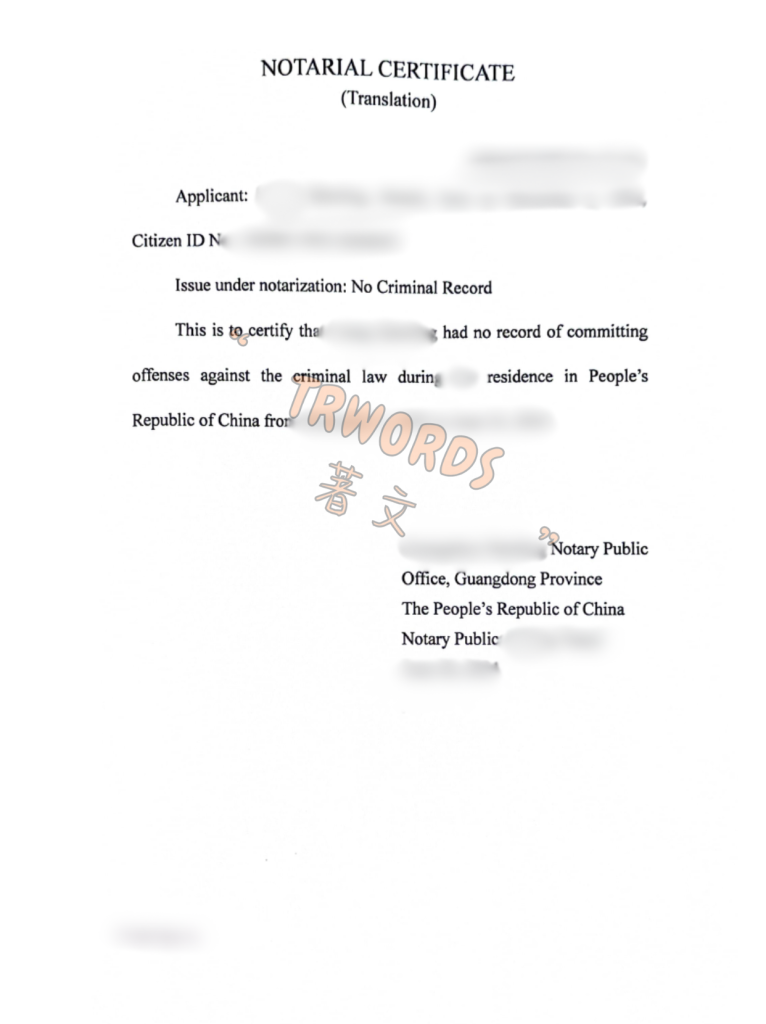
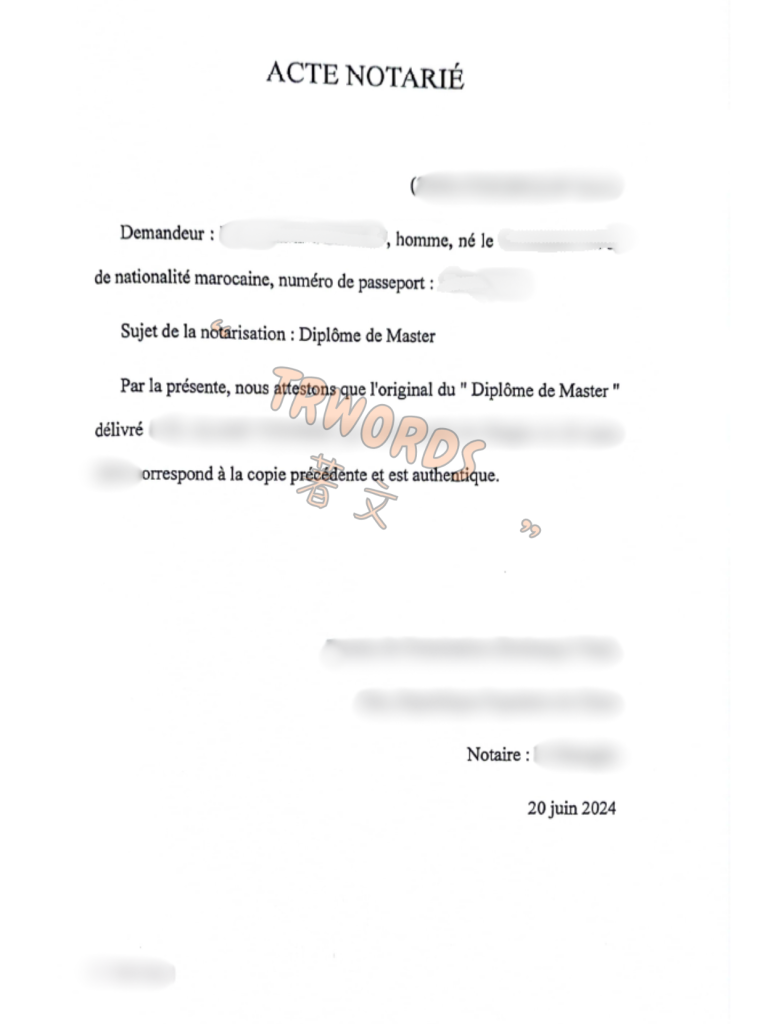
Common Notarization Needs for Expats in China
Expats often need documents notarized in China for use outside Chinese mainland. The most frequently requested certificates include:
- Criminal Record Certificate (No Criminal Conviction Certificate)
Required for:
- Immigration and permanent residence
- Work visa applications
- Background checks for employment abroad
- University admissions and licensing
- Degree, Diploma, and Transcript Notarization
Required for:
- University enrollment
- Credential evaluations (WES, UK ENIC, ANABIN, etc.)
- Professional qualification recognition
- Overseas job applications
- Passport Translation and Notarial Certificate
Used for:
- Real estate transactions
- Banking and taxation procedures
- Marriage registration
- Employer HR verification
- Public security / visa extensions
- Birth, Marriage, and Divorce Certificates (Foreign-Issued)
When a foreign document is used inside China, it often requires:
- Translation
- Notarization
- Apostille or consular legalization (depending on the issuing country)
- Employment Certificates and Qualification Documents
Especially for teachers, medical practitioners, researchers, and technical professionals who held positions in China.
- Company Documents for Foreign Entrepreneurs
- Power of Attorney
- Articles of Incorporation
- Commercial agreements
- Corporate certificates
These documents frequently require legalization to be used with foreign authorities or business partners.
Understanding the Chinese Notarization System
Chinese notarization is designed to verify:
- The authenticity of a document
- The identity of the applicant
- The accuracy of a translation
- The legality of a signature or statement
Unlike some countries where a simple stamp is sufficient, China issues formal Notarial Certificates, usually bilingual.
Apostille vs. Consular Legalization
Depending on the destination country:
- Apostille (Hague Convention countries)
Documents receive an Apostille and can be used directly. - Consular Legalization (Non-Hague countries)
Documents require:- Authentication by the Ministry of Foreign Affairs of China
- Legalization by the relevant foreign embassy or consulate in China
This distinction is essential for compliance and successful acceptance abroad.
Step-by-Step Process for Expats Applying for Notarization in China
Step 1: Submit Electronic Materials
Clients typically provide:
- Passport or ID page (scan/photo)
- Relevant document (degree, contract, certificate, etc.)
- Application details such as purpose of use and destination country
Step 2: Professional Translation (If Required)
Translations must be completed inside China for most authorities to accept them.
Step 3: Notarization by a Chinese Notary Office
The notary office issues a formal Notarial Certificate.
Some cases require brief video verification of identity.
Step 4: Apostille or Consular Legalization
Based on the document’s destination country.
Step 5: Courier Delivery
Documents are shipped worldwide through reliable international express services.
Remote clients can complete the entire process without visiting a notary office in person.
Important Notes for Expats Using Foreign Documents Abroad
Many countries require recent issuance
Criminal record certificates often must be issued within 3–6 months of submission.
Name matching is critical
Your Chinese degree or employment certificate should match the spelling on your passport to avoid rejection by immigration authorities.
For Europe, Apostille is usually sufficient
Especially for:
- France
- Netherlands
- Germany
- Spain
- Italy
- Portugal
- Greece
- Finland
- Belgium
For the Middle East and Africa, consular legalization is common
Countries often requiring full embassy legalization include:
UAE, Qatar, Kuwait, Egypt, Jordan, Vietnam (sometimes), etc.
Notarial certificates can be bilingual
English–Chinese versions are widely accepted internationally.
Why Expats Prefer Professional Notarization Assistance
Expats often encounter difficulties such as:
- Notary offices that do not provide English explanations
- Confusing translation requirements
- Unclear rules on Apostille vs. consular legalization
- Inconsistent procedures across different cities
- Challenges for people who have already returned to their home country
- Local authorities requiring strictly formatted certificates
A professional agency helps by:
- Reviewing the required documents
- Confirming the correct type of notarization and legalization
- Preparing compliant translations
- Handling notarization, authentication, and delivery
- Assisting clients worldwide through a fully remote process
This reduces delays and minimizes the risk of rejection.
Real Cases & Scenarios
Case 1: Former Student Applying for PR in Canada
A student who studied in Shanghai needs:
- Criminal Record Certificate
- Degree Certificate Notarization
Both must be notarized and then used directly in Canada with an Apostille or via consular legalization depending on the process.
Case 2: Teacher Returning to the UK for QTS Evaluation
A foreign teacher needs:
- Employment Certificate Notarization
- Degree Notarization
- Passport Translation
These documents support both job applications and licensing reviews.
Case 3: Expat Selling Property in China from Overseas
A Power of Attorney is issued and notarized for property transactions, with translation and legalization depending on the receiving party’s requirements.
Case 4: Family Applying for EU Family Reunification
Birth certificates, marriage certificates, and proof of residence in China must be translated, notarized, and Apostilled for EU immigration authorities.
These scenarios help reassure readers that the service applies to real-life situations.
Service Scope and Remote Workflow
Our document support includes:
- Consultation on document requirements
- Translation in English, French, Spanish, or other languages
- Chinese notarization
- Apostille or consular legalization
- International shipping
Expats can complete the process remotely by sending scanned copies of their documents.
If you need assistance with notarization or legalization for use abroad, our team (info(at)trwords.com) can help review your materials and guide you through each step.